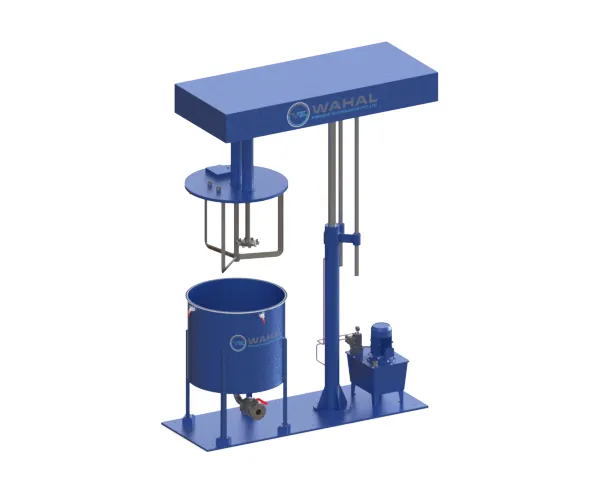
What is a high speed disperser?
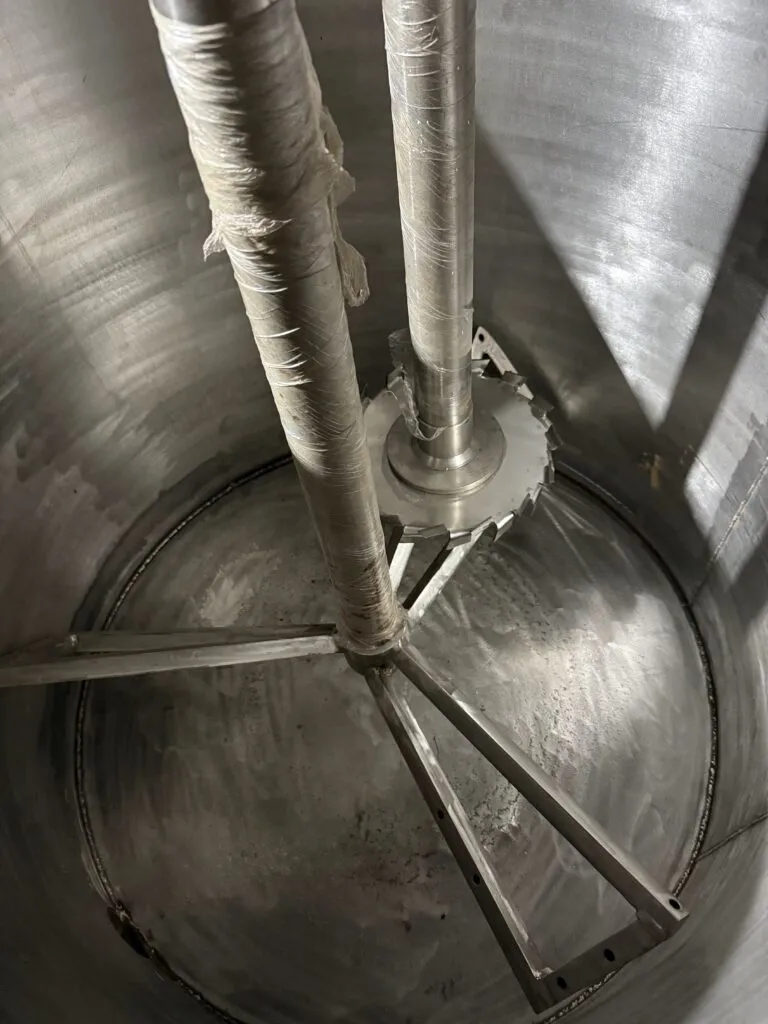
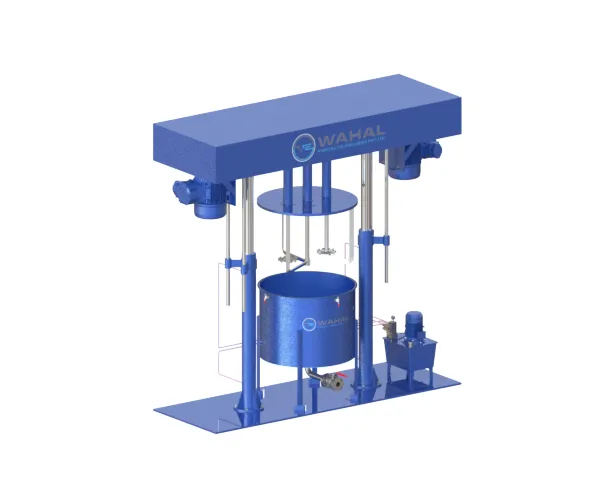
A high speed disperser (HSD), also called a high speed dissolver, is a mixer built around a cowl blade. The blade turns at high speed in the liquid and creates intense shear forces and turbulence. That breaks down agglomerates, disperses solid particles and mixes them through the product. The same machine is used for emulsification.
The cowl blade is a saw-tooth blade, also written cowles-type. The development of the high speed disperser blade paved the way to faster processing of paints and coatings.
How a high speed disperser works
- The cowl blade turns at high speed in the liquid medium.
- It generates intense shear forces and turbulence.
- Agglomerates break up, and the solid particles are dispersed and mixed throughout the liquid.
Speed and power are adjustable, so the operator sets how intense the dispersion or emulsification is for the viscosity and the application.
Advantages over conventional mixers
- Intense shear. A high speed disperser generates much higher shear than a conventional mixer. It breaks up agglomerates, disperses solids and spreads additives evenly, which improves product quality.
- Rapid mixing. The high rotational speed mixes and homogenizes quickly, so processing time is shorter than with a conventional mixer.
- Adjustable speed and power. Operators tune the intensity of dispersion and emulsification for different viscosities and applications.
High speed disperser for paints and coatings
In paints and coatings the high speed disperser disperses pigments, stabilizes suspensions and creates a uniform particle size, which gives consistent colour distribution, texture and stability. At the start of paint production it disperses pigments into the liquid vehicle, wetting and separating them so they do not form agglomerates.
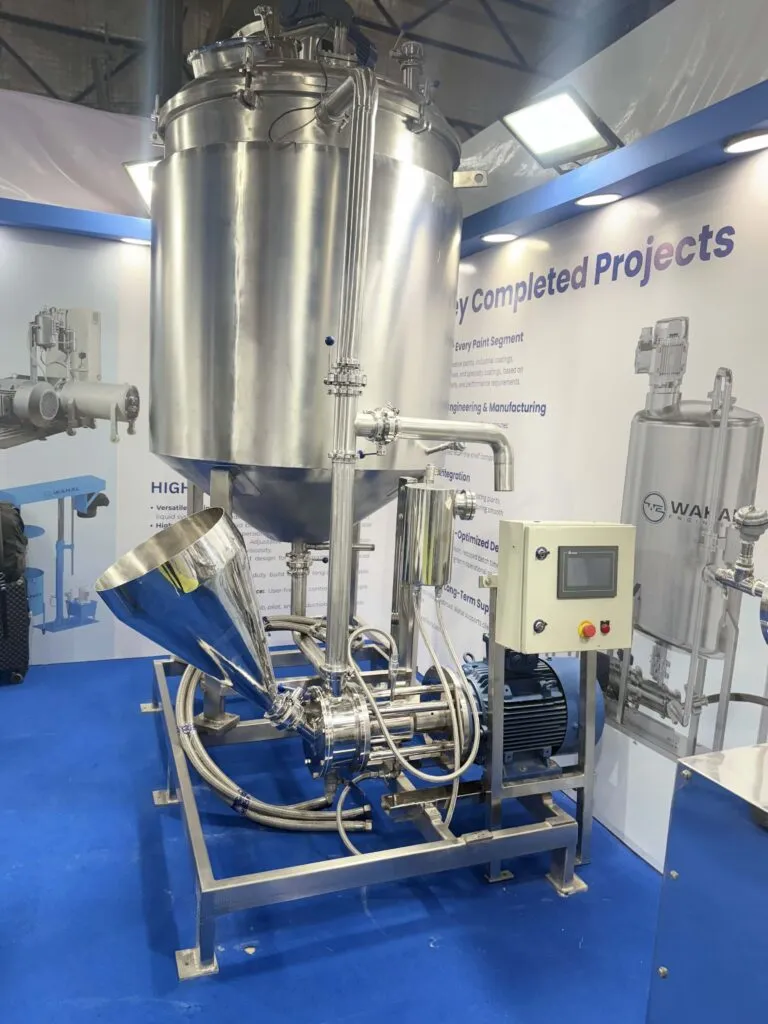
In a Wahal paint manufacturing plant the disperser sits between powder induction and wet grinding: a liquid powder mixer first takes pigments and fillers into the liquid, the high-speed disperser then handles pigment dispersion and let-down, and a bead mill grinds to the target particle size. The decorative paint process runs raw material handling, premixing, dispersion, let-down, tinting, filtration and packaging.
Applications by industry
High speed dispersers are used in these industries:
| Industry | What the disperser does |
|---|---|
| Paints and coatings | Disperses pigments, stabilizes suspensions, gives a uniform particle size |
| Inks | Traditionally used for the premix of resin, pigment and carrier, before high shear dispersion and wet milling; see our ink manufacturing plant |
| Chemical and petrochemical | Mixes and disperses chemicals, dyes and additives, and gives a uniform final product |
| Adhesives and sealants | Disperses and mixes components; helps bonding properties and viscosity control |
| Pharmaceuticals and cosmetics | Disperses active ingredients, colorants and stabilizers in creams, lotions and ointments |
| Food and beverage | Emulsifies oils, flavors and additives; disperses powders; mixes sauces |
| Battery electrode slurries | Used for lower viscosity slurries; see battery slurry mixing |
High speed disperser or high shear homogenizer?
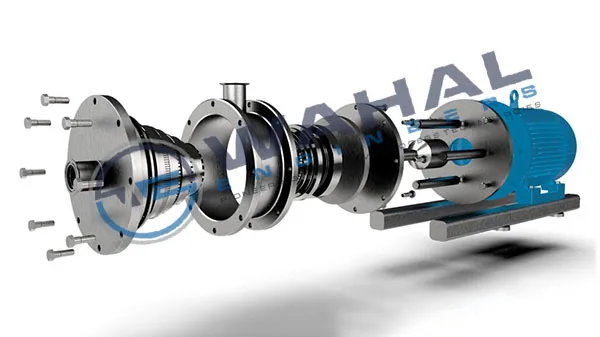
A high speed disperser is used for the initial dispersion of pigments into a liquid. It does not suit every job. A disperser can leave an emulsion that looks uniform but separates over time, and where it does reach a small enough droplet size it can build up excess heat and need a long mix cycle. A rotor-stator high shear homogenizer works differently: a rotor spins inside a close-fitting stator and shears the product.
| If your job is | Consider |
|---|---|
| Dispersing pigments, additives and powders into a liquid | High speed disperser (this page) |
| Stable, fine emulsions or a smaller particle size | High shear homogenizer or inline homogenizer |
| High-viscosity products | Twin shaft disperser or triple / multi shaft disperser |
| Dust-free induction of powders into a liquid | Powder induction mixer |
| Rubber, resin and polymer solids to dissolve | Dis-integrated dissolver or duplex disintegrator dissolver |
| Grinding to a fine target particle size | Bead mill |
Twin shaft dispersers pair a disperser blade with a slower anchor shaft fitted with scrapers, for high-viscosity products mixed under laminar conditions. Triple and multi shaft dispersers use two or three independently driven agitators, with vacuum mixing in a closed system.
Motors, control panels and options
| Option | Details |
|---|---|
| Hazardous areas | ATEX approved or IEC 60079 flameproof / explosion-proof motors, with certification |
| Standard motors | TEFC (totally enclosed fan cooled); explosion-proof / ATEX / UL certified motors, for use with frequency inverters or starters |
| Finish | Washdown motors and stainless motors |
| Control panel | NEMA / PESO / ATEX approved panels |
| Speed and power | Adjustable |
Try it on your product first
There is no better way to test a machine than on your own product. Our fully equipped laboratory can run your trial, so you can see the end result and the time it takes. If you want to keep a machine for trials, our rental program lets you keep it for as long as you need, pre-configured to your requirements, with expert process guidance and back-up from our technical department. See trials and rentals.
Frequently asked questions
What is a high speed disperser used for?
It breaks up agglomerates, disperses solid particles and emulsifies ingredients in a liquid. It is used for paints and coatings, inks, chemicals, adhesives and sealants, pharmaceuticals, cosmetics, and food and beverage products.
What is an HSD machine, and is it the same as a high speed dissolver?
HSD stands for high speed disperser. An HSD machine is a high speed disperser: a mixer with a cowl blade that turns at high speed. "High speed disperser" and "high speed dissolver" are two names for this type of machine.
What is the difference between a high speed disperser and a high shear homogenizer?
A high speed disperser uses a blade turning in the liquid. A high shear homogenizer spins a rotor inside a close-fitting stator. The disperser is used for the initial dispersion of pigments. Where you need a stable, fine emulsion or a smaller particle size, we recommend a rotor-stator high shear mixer. See our high shear homogenizer range.
Can a high speed disperser handle high-viscosity products?
Speed and power are adjustable to suit different viscosities. For high-viscosity products we also make twin shaft dispersers and triple / multi shaft dispersers, which mix under laminar conditions.
Can it be supplied for hazardous areas?
Yes. Our dispersers can be supplied with ATEX approved motors or IEC 60079 flameproof / explosion-proof motors with certification for hazardous applications, and with NEMA / PESO / ATEX approved control panels.
Can I test a high speed disperser on my product before buying?
Yes. You can run a trial in our fully equipped laboratory, or rent a machine for as long as you need. See trials and rentals.
Do you manufacture high speed dispersers in India?
Yes. Wahal Engineers is a high shear mixer manufacturer in India and makes its own mixers, dispersers and mills, so it controls the quality, performance and customization of the core equipment.