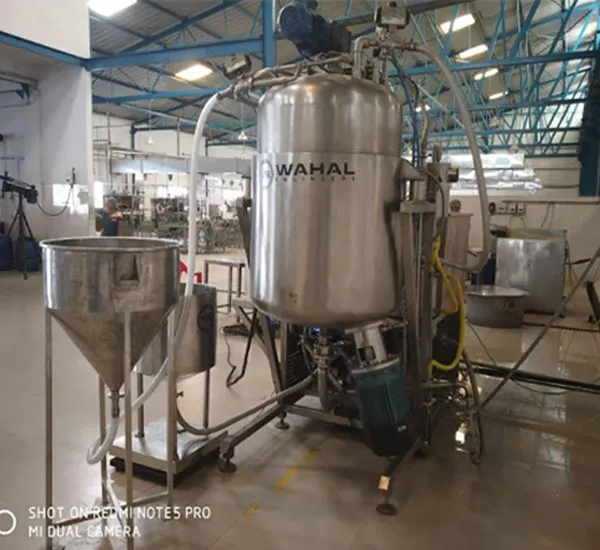
What a lube oil blending plant does
A lube oil blending plant, also called a lubricant blending plant or lube blending plant, combines base oils and additives into a finished lubricant with the required viscosity and performance. Additives such as antioxidants, detergents, dispersants and anti-wear agents have to be spread evenly through the base oil, and the final product has to meet its specification.
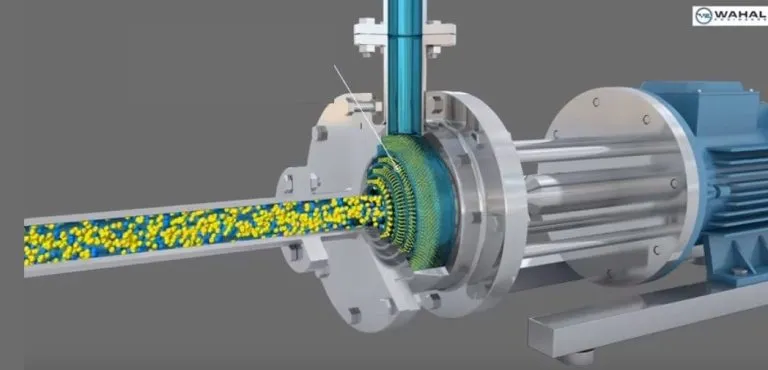
Wahal high shear mixers do the blending, dispersing and dissolving work in some of these stages. A rotor-stator work head breaks down and disperses particles in the fluid to give a homogeneous mixture.
Base oils of different viscosity are a case where a plain agitator falls short. Agitators blend liquids of similar viscosity well, but when the viscosities differ, a high shear mixer draws the liquids into the work head and blends them almost instantaneously.
Where high shear mixing is used in the lube oil blending process
| Stage | What high shear mixing does |
|---|---|
| Blending base oils | Blends different base oils to reach the desired viscosity and performance. The intense mixing gives a uniform mixture that meets the required specification. |
| Additive incorporation | Antioxidants, detergents, dispersants and anti-wear agents are mixed into the base oil and distributed evenly. |
| Dissolving VI improvers | Draws solid polymer blocks into the rotor-stator and dissolves them in the base oil. See the section below. |
| Emulsifying water-based additives | Where a formulation uses water-based additives, breaks the water into small droplets in the oil phase, for stability and to prevent phase separation. |
| Particle size reduction | Reduces solid particles in the oil, so the product is free of agglomerates and has a consistent particle size distribution. |
| Temperature control | The mixing system can be fitted with heating or cooling, for processes that need precise temperature control. Inline homogenizers offer a heating or cooling jacket. |
| Batch and continuous processing | The same mixers work in batch and in continuous set-ups. |
Lube oil blending machines and equipment
A Wahal lube oil blending plant uses a few types of lube oil blenders and dissolvers, each with its own page. Which one you need depends on the stage and on what has to be dissolved or blended.
| Machine | Role in lube oil blending |
|---|---|
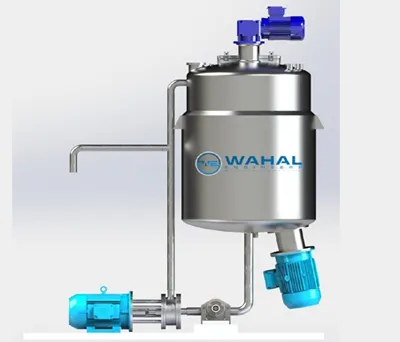
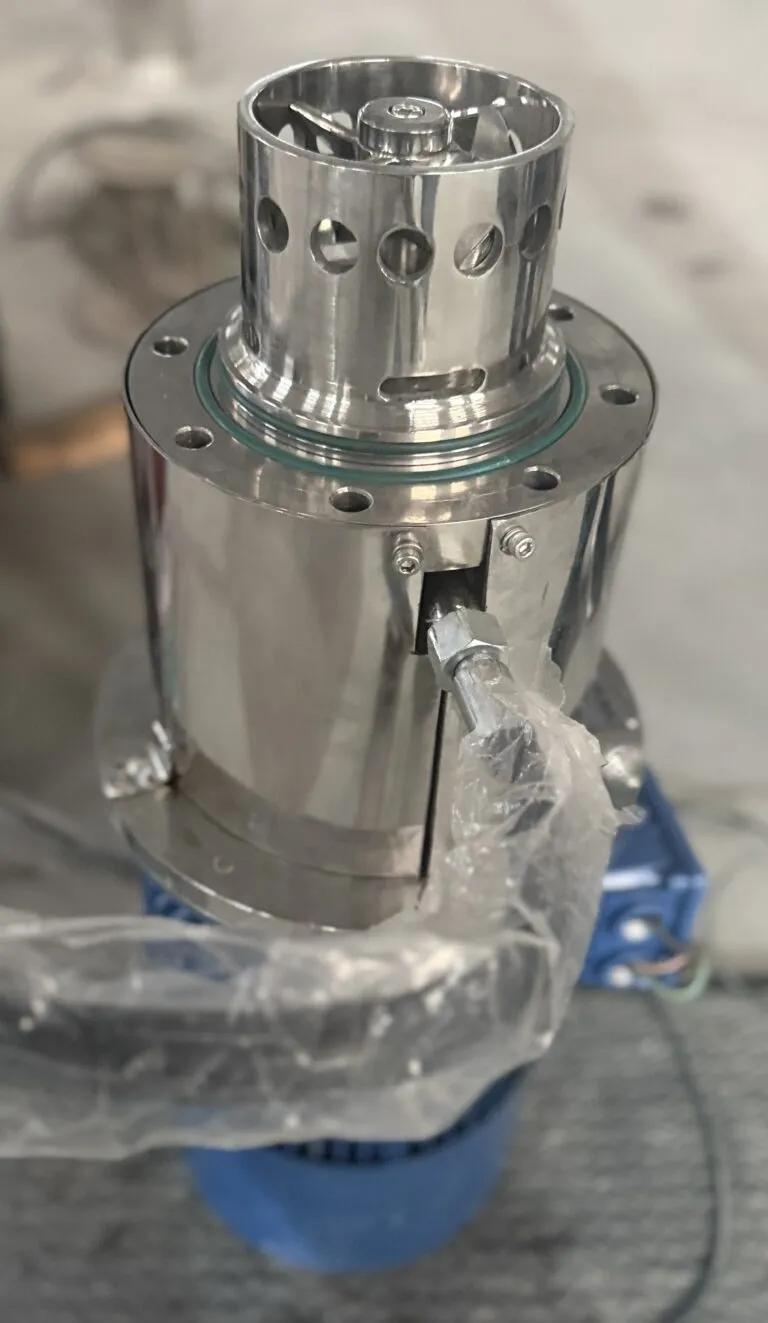
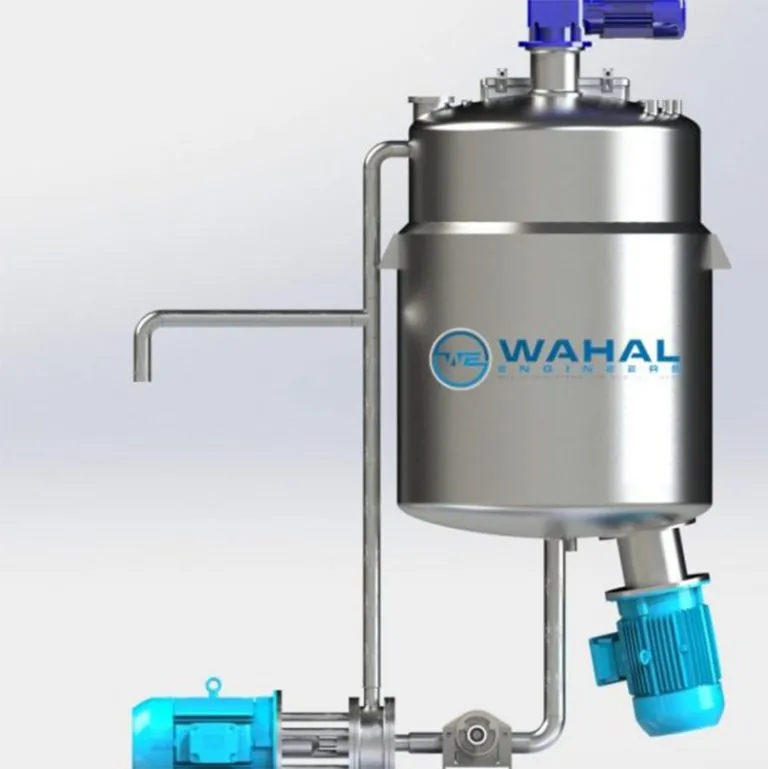
| Bottom-mounted homogenizer | Drive under the vessel, with the rotor-stator working in the product from below. Breaks down blocks, bricks and agglomerates, dissolves hard solids and can disintegrate rubber bales. ATEX-approved or IEC 60079 flameproof motors and ATEX control panels are available. |
| Inline homogenizer | Sits in the pipeline or a recirculation loop and is self-pumping in most cases. Runs single pass or on a recirculating batch. Heating or cooling jacket and double mechanical seal are available. |
| Dis-integrated dissolver | A bottom-mounted homogenizer on the vessel followed by an inline homogenizer, in one system. Lube oils are a typical application. |
| Duplex disintegrator dissolver | Two rotor-stator stages in sequence for rubber, resin and polymer solids, with less recirculation time. |
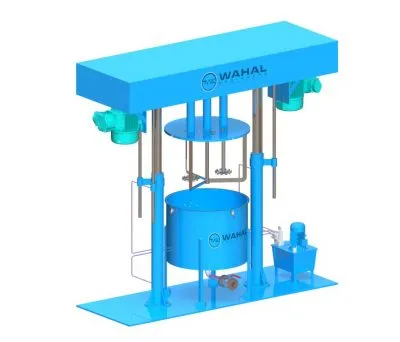
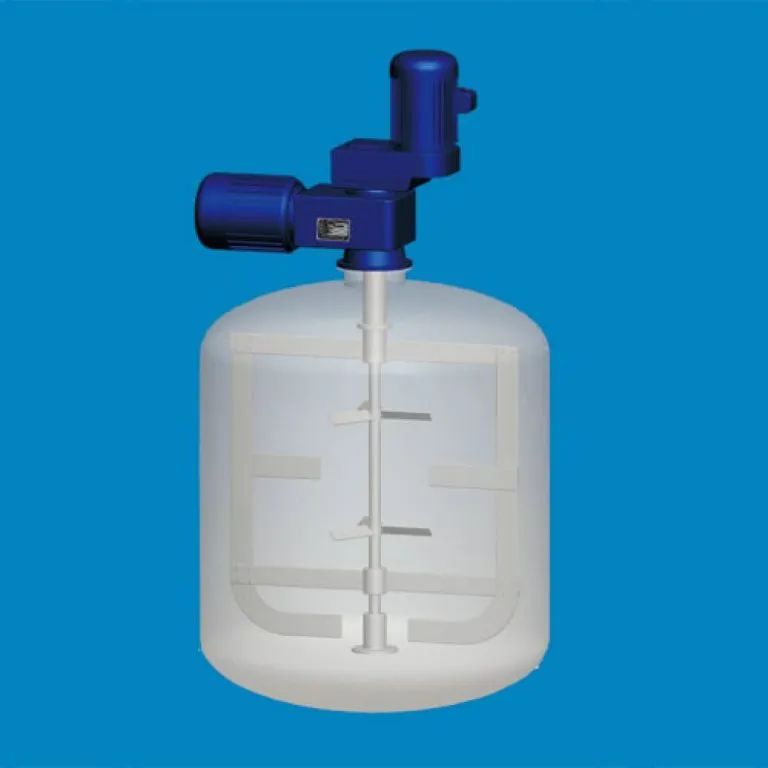
| Agitators | Top, side or bottom entry. For very viscous, dense products such as grease, a contra-rotary (dual-shaft) agitator is used. |
| Laboratory batch homogenizer | Batch units from 2 litres use the same rotor-stator principle as the production machines, so trial results scale up. |
The wider range is on the high shear homogenizer page: viscosity from 1 to 50,000 cP across batch and inline models.
Dissolving VI improvers in base oil
VI improvers are polymers used in multigrade lubricants to control viscosity relative to temperature. They are high-molecular-weight polymers that need intense, controlled shear to disperse without degrading the polymer chains.
In Wahal's dissolver, a bottom-mounted mixer at the base of the dissolving tank creates a vortex that draws solid polymer blocks, up to 400 mm, from the surface into the rotor-stator. The small particles are pumped through an inline mixer and recirculated until fully dissolved. Manual shredding or cutting of the blocks is not needed, even for hard polymers.
Fitting the dissolver at the lubricant blending plant itself gives three benefits:
- Lower cost: it limits the transported volume and reduces inventory costs.
- Safer handling: it removes dusty and unsafe shredding operations.
- Flexibility: motor speeds are adapted to the product type and volume.
The bottom homogenizer design is process-designed for each job, not catalog-selected. Its features include a high tip-speed rotor-stator, stator slot profiles for polymer dispersion, a heavy-duty mechanical seal suitable for hot oils, low vibration for long continuous runs, and compatibility with high-viscosity fluids.
Wahal's bottom homogenizer dispersing plants are used for lubricant additive packages, VI improver concentrates, engine oil premixes, gear oil and hydraulic oil formulations, and polymer-thickened industrial oils.
For the full process, see the viscosity index improver dispersing plant and the high shear dissolver.
Choosing the mixer for your lube oil formulation
The right mixer depends on the formulation and on the characteristics of the base oils and additives. We check the choice in three ways:
- Process design: each bottom homogenizer is designed for the process, not picked from a catalogue.
- CFD analysis: we use CFD analysis to determine the right mixer.
- Trial on your own product: you can test a machine in our fully equipped laboratory, or rent one pre-configured to your requirements. See trials and rentals.
Tell us your base oils, additives, batch size and output and we will size the mixing system around them.
Frequently asked questions
What is a lube oil blending plant?
A lube oil blending plant combines base oils and additives into a finished lubricant with the required viscosity and performance. Wahal supplies the high shear mixers that blend the base oils, disperse the additives and dissolve VI improver polymers in it.
What is the lube oil blending process?
Base oil is charged into the vessel, the bottom homogenizer starts, and polymer and additives are added and drawn straight into the rotor-stator. The mix is dispersed, recirculated through an inline homogenizer until fully dissolved and homogenized, kept at temperature with jacketed heating, then transferred. The steps are listed above.
What machines are used in a lube oil blending plant?
Wahal's lubricant blenders are a bottom-mounted homogenizer with an inline homogenizer, also supplied as one dis-integrated dissolver, for blending and dissolving. Agitators and laboratory homogenizers complete the range. See the equipment table above.
How are VI improvers dissolved in base oil?
Solid polymer blocks are drawn from the surface into the rotor-stator of a bottom-mounted mixer, broken into small particles and recirculated through an inline mixer until fully dissolved. No manual shredding is needed. Details are on our viscosity index improver page.
Can the same mixers run batch and continuous lube oil blending?
Yes. Wahal high shear mixers can be used in both batch and continuous processing set-ups.
Can water-based additives be mixed into lube oil?
Where a formulation uses water-based additives, a high shear mixer can emulsify the water into the oil phase. The high shear breaks the water into small droplets, which promotes stability and prevents phase separation.
Can Wahal mixers be used in hazardous areas?
Yes. Our high shear mixers can be supplied with ATEX-approved motors or IEC 60079 flameproof motors, and ATEX-approved control panels, for hazardous applications.
Can you mix grease?
For very viscous, dense products such as grease, our agitator range includes a contra-rotary (dual-shaft) agitator. See agitators.
What does a lube oil blending plant cost?
It depends on the formulation, batch size and output. Send us those and we will size the mixing system around them.
Can I test my lube oil formulation on a Wahal machine before buying?
Yes. You can run a trial on your own product in our fully equipped laboratory, and a rental program lets you keep a machine pre-configured to your requirements.