
What SLES dilution involves
Sodium lauryl ether sulfate (SLES, also written sodium laureth sulphate) is a surfactant used in personal care and household products for its foaming and cleansing properties. It is supplied concentrated and highly viscous, so it is mixed with water to the concentration a formulation needs before further processing.
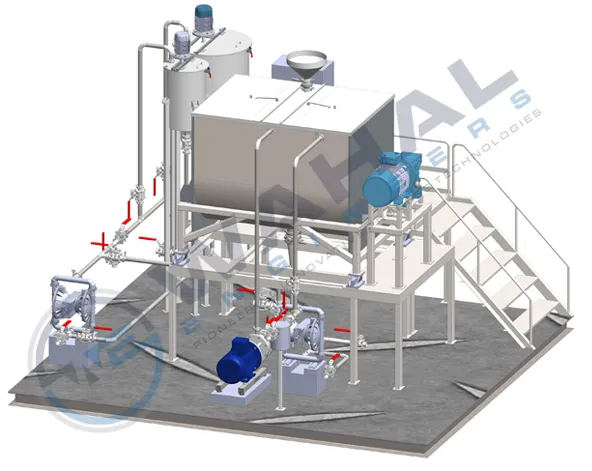
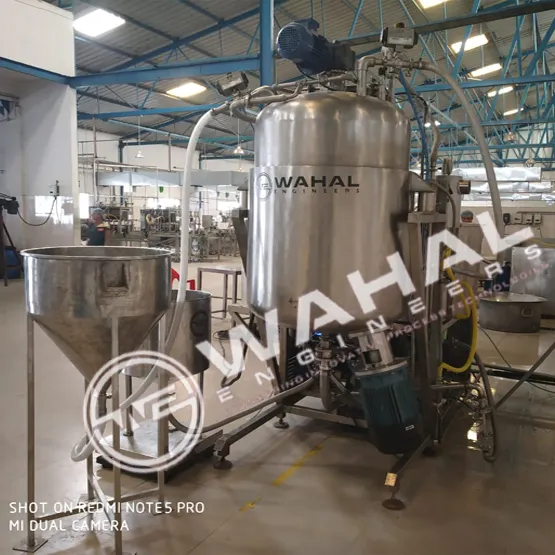
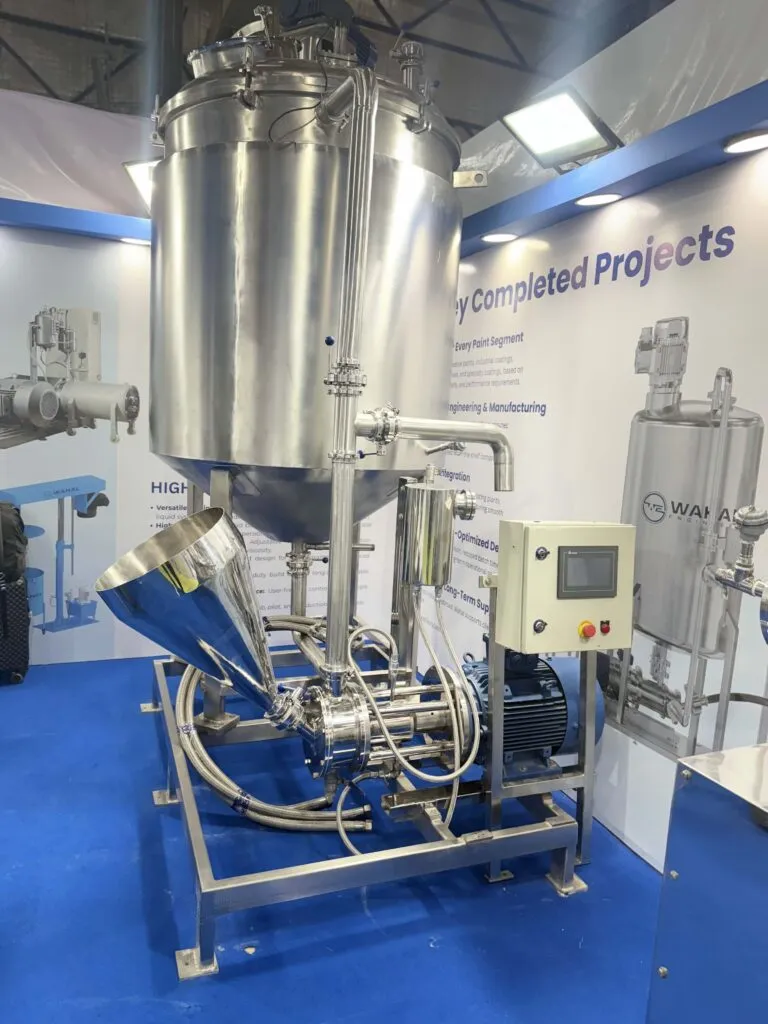
An SLES dilution and mixing plant does that first step: it doses SLES and water into a vessel or a recirculation loop and homogenizes them into a solution of consistent concentration, batch after batch. Wahal builds these plants around its high shear homogenizers.
Why concentrated SLES (SLES paste) is hard to dilute
In its concentrated form, often called SLES paste, SLES is highly viscous, difficult to incorporate into a formulation directly and slow to get into solution with a conventional agitator. The dilution only works if the mixture is homogeneous; an uneven batch means a concentration that varies through the product.
The second problem is foam. Air whipped in during agitation turns into foam in a surfactant, which means under-filled packs and a dull product. Wahal's handwash and shampoo lines therefore homogenize under vacuum, which stops foaming and gives an air-free, glossy product.
How a Wahal high shear homogenizer dilutes SLES in water
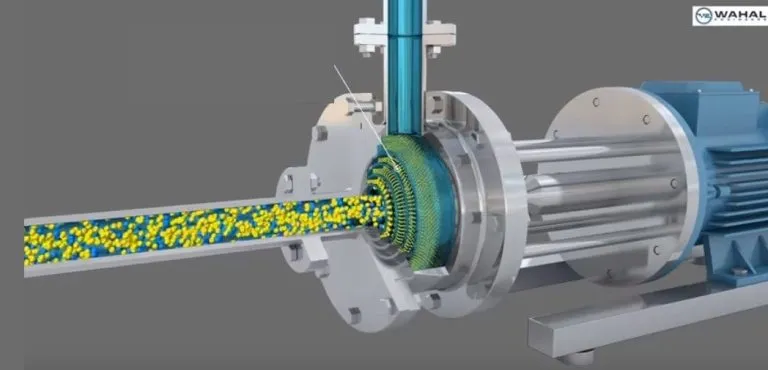
In a Wahal rotor-stator homogenizer, a rotor turns at high speed inside a close-fitting stator, and the SLES and water are sheared in the narrow gap between them. The shear and turbulence break the concentrated SLES into fine droplets and disperse them evenly through the water.
Compared with stirring, that gives:
- A uniform solution. Consistent concentration and properties, batch after batch.
- Shorter mixing time. High shear cuts the time to complete dilution and raises production rates.
- A stable solution. No phase separation in storage.
- A machine sized to your line. Capacities and configurations for different production scales.
- Hygienic, energy-efficient design. Easy to disassemble and clean.
Equipment in an SLES dilution and mixing plant
Which machines a plant uses depends on batch size, output and whether the product must stay free of air.
| Machine | Role in SLES dilution | Key figures |
|---|---|---|
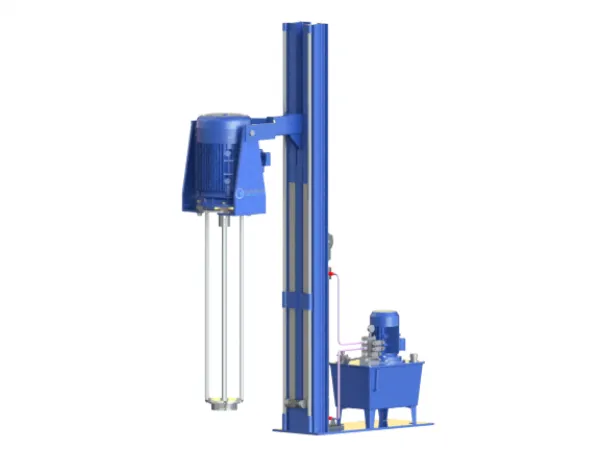
| In-tank batch homogenizer | Works inside the vessel from the top, built to its length and diameter, with hydraulic lifting; an enclosed-shaft version suits GMP duty. | Hygienic and explosion-proof models; stators chosen with CFD |
| Inline homogenizer | In a recirculation loop or a continuous line. Self-pumping; mixer, vessel and pipework form a closed system that keeps air out. | 15 to 200,000 L/hr; jacketed and double-sealed versions optional |
| Vacuum processing plant | Vacuum-tight tank, scraper agitator, inline high shear mixer and triple jacket: air is removed as it forms. Used for handwash and shampoo lines. | 100 to 20,000 litres; PLC dosing and recipe storage |
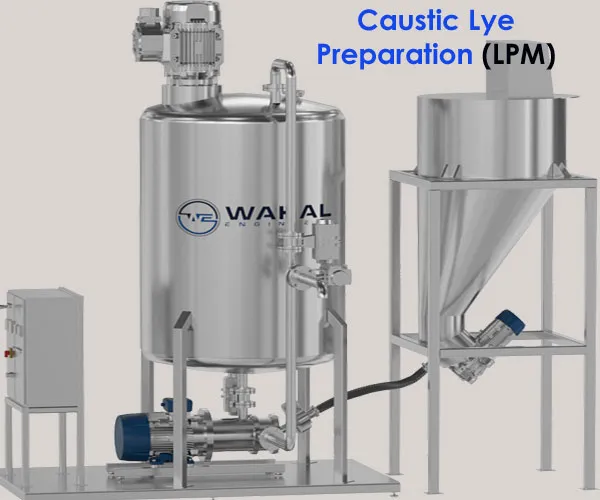
| Powder induction mixer (LPM) | Draws detergent-plant powders in below the liquid surface, dust-free, with less air entrainment and foam. | LPM 10 to LPM 200; jumbo bag, silo, hose or hopper feed |
| Laboratory batch homogenizer | Trials of your SLES grade and target concentration before scale-up. | From 2 litres |
Dosing of liquid and powder ingredients can be automated, and the line can run on PLC control with stored recipes.
Batch or inline SLES mixing?
- Batch, in the vessel: an in-tank or enclosed-shaft homogenizer, for smaller-scale or multi-product production and for GMP duty.
- Inline, in a loop or a line: an inline homogenizer, for continuous, high-volume and air-free processing. Very viscous feeds can be force-fed with a positive displacement pump.
- Either way: the range covers 1 to 50,000 cP, and we confirm the stator choice with CFD analysis.
Where diluted SLES is used
- Shampoos and hair care: foaming and cleansing of hair and scalp.
- Body washes, shower gels, bubble baths, liquid soaps and hand washes: lather and a smooth texture.
- Household cleaners: dishwashing liquids and all-purpose cleaners.
- Industrial cleaners: grease and grime on machinery.
- Textile and leather processing: wetting and emulsifying agents.
- Creams and lotions, pet shampoos and agricultural wetting agents.
Caustic lye and other detergent streams
An SLES line is usually one part of a detergent or personal care plant. Wahal supplies the mixers for the other streams:
- Caustic lye. Sodium hydroxide flakes or pearls are inducted dust-free into water with a powder induction mixer, which spreads the heat of the exothermic reaction through the batch: 2 to 6 TPH of solids, final concentrations up to 50%. See caustic lye preparation.
- Detergent and surfactant powders. Dissolving them brings foaming and dusting; the powder induction mixer draws the powder in below the liquid surface, with less air entrainment and foam.
- Liquid handwash and liquid detergent lines. Water with diluted SLES or SLS, plus the other ingredients, colouring pigments and perfumes, with automated dosing and vacuum homogenization: see our liquid handwash mixers.
Run a trial on your SLES grade in our fully equipped laboratory, or rent a machine pre-configured to your requirements for as long as you need: see trials and rentals. Wahal Engineers builds its homogenizers and plants in India at its factory in Bhigan (Murthal), Sonipat, Haryana; the head office is in New Delhi.
Frequently asked questions
What is SLES dilution?
Mixing concentrated sodium lauryl ether sulfate (SLES) with water to the concentration a formulation needs. Concentrated SLES is highly viscous, so the two are homogenized, not just stirred, to get a consistent concentration through the batch.
How do you dilute SLES in water?
SLES and water are dosed into a vessel or a recirculation loop, drawn into the rotor-stator work head of a high shear homogenizer, sheared into fine droplets and dispersed through the water, then recirculated until the batch is uniform. Under vacuum, or in a closed inline system, no air is whipped in.
Why does SLES foam when it is mixed, and how do you stop it?
Air whipped into the batch during agitation turns into foam in a surfactant. Wahal's handwash and shampoo lines homogenize under vacuum, which stops foaming and gives an air-free, glossy product.
Should SLES be diluted in a batch or an inline mixer?
Batch, with an in-tank or enclosed-shaft homogenizer, suits smaller-scale or multi-product production. Inline, with an inline homogenizer in a loop or a line, suits continuous, high-volume and air-free processing.
What capacity can an SLES dilution plant have?
Inline homogenizers run from 15 to 200,000 L/hr, vacuum processing plants from 100 to 20,000 litres, and laboratory homogenizers from 2 litres for trials.
Can the same plant make shampoo or liquid handwash?
Yes. Liquid handwashes are mainly water with diluted SLES, or sometimes SLS, plus other ingredients, colouring pigments and perfumes, and the same system is used for liquid detergents, shampoos, face washes and creams.
Do you also supply caustic mixers and detergent powder mixers?
Yes. Caustic lye is prepared with a powder induction mixer that inducts sodium hydroxide flakes or pearls into water dust-free, at 2 to 6 TPH and up to 50% concentration. The same mixer dissolves detergent and surfactant powders with less foam.