Examples of Equipment Used
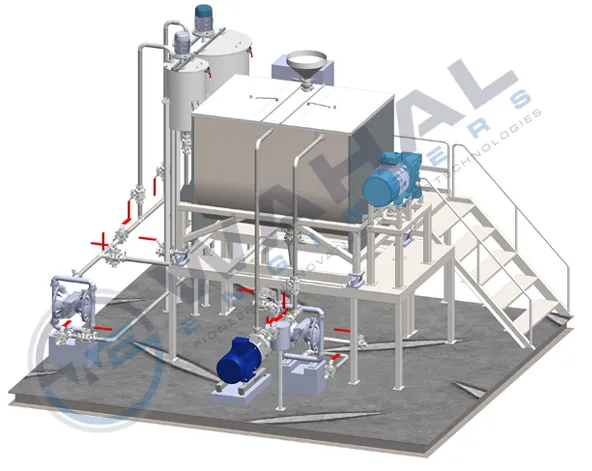
- Storage tanks and vessels
- Weighing and dispensing systems
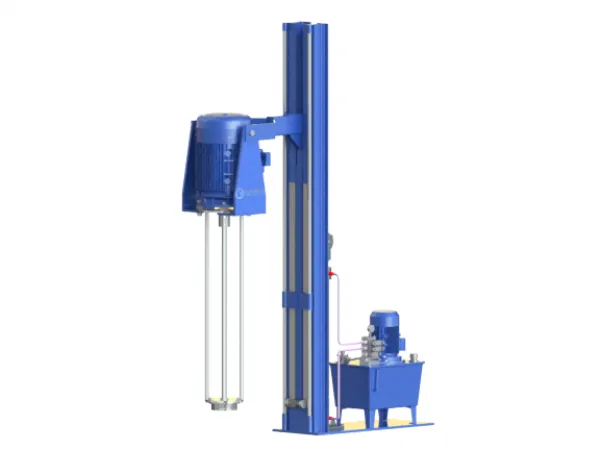
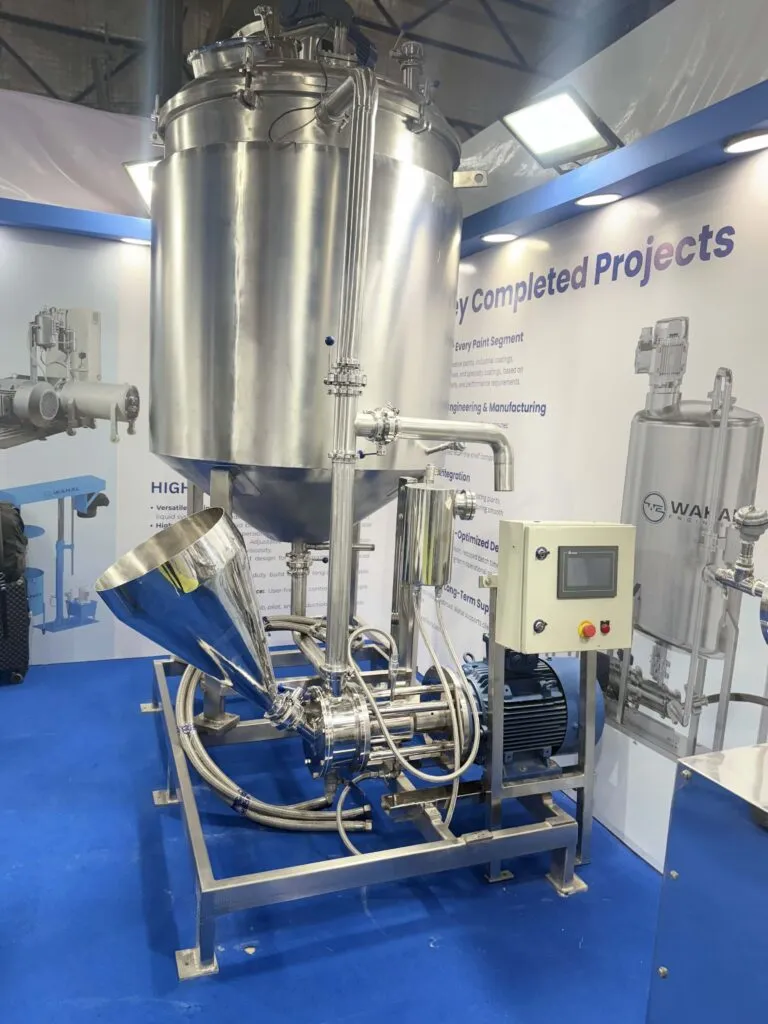
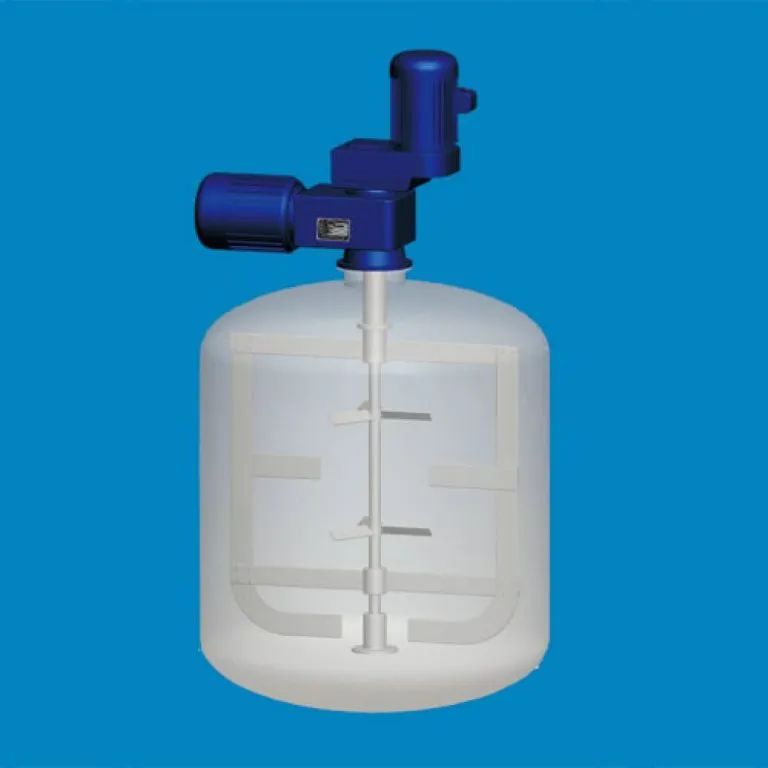
- Mixers (Wahal high-shear mixers, propeller mixers, etc.)
- Filters
- Pumps
- Filling machines
- Labeling machines
- Control systems
Liquid Powder Mixers : a crucial role in the manufacturing of Water-Based Paints
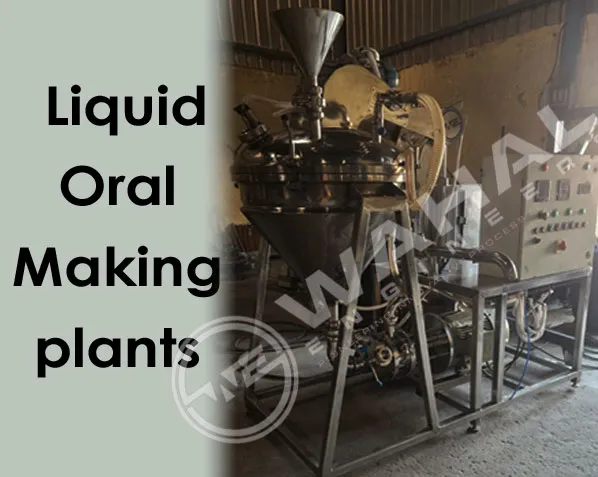
- Wahal Liquid oral manufacturing plants are sophisticated facilities designed to produce large quantities of liquid medications like syrups, suspensions, and solutions. Here's a simplified breakdown of their function
- Key Features of Modern Liquid Oral Plants:
- Automation: Many processes are automated to increase efficiency and reduce human error.
- CIP/SIP Systems: Cleaning-in-place and sterilization-in-place systems ensure hygiene and prevent contamination.
- GMP Compliance: Plants are designed and operated according to Good Manufacturing Practices (GMP) adhering to 21 CFR norms ( FDA approved ) to guarantee product quality and safety.
- Closed Systems: Closed systems minimize the risk of contamination and product loss.
- 1. Raw Material Handling:
- Storage: The plant receives raw materials (active pharmaceutical ingredients, excipients, solvents, etc.) and stores them in appropriate conditions to maintain quality.
- Preparation: Raw materials are weighed, measured, and pre-processed as needed. This might involve milling, grinding, or dissolving solids.
- Sugar Syrup Preparation: Many liquid orals use a sugar syrup base. This is prepared in dedicated vessels with heating and mixing capabilities to dissolve sugar completely.
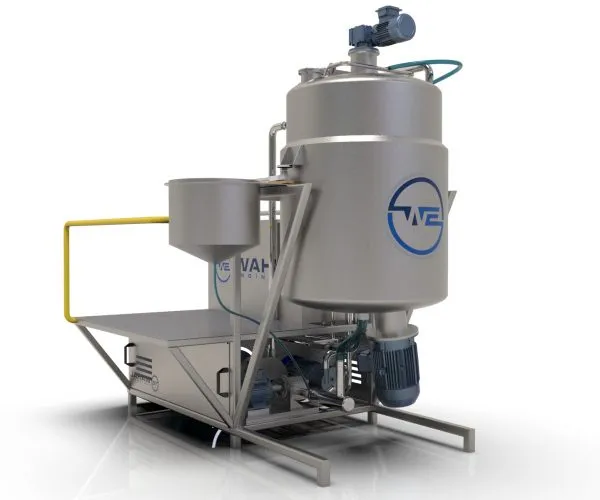
- Main Mixing: Ingredients are combined in large mixing vessels equipped with agitators (like patented high-shear mixers from Wahal!). These ensure uniform dispersion and dissolution of all components.
- Adjustments: pH, viscosity, and other parameters are carefully adjusted to meet the formulation's specifications.
- Clarification: The mixture is passed through filters to remove any undissolved particles or impurities, ensuring a clear and homogeneous product.
- Holding Tanks: The finished liquid medication is stored in holding tanks before filling.
- Transfer: Pumps and pipelines transfer the liquid between different stages of the process.
- Filling Machines: Automated machines fill the liquid into bottles or other containers with precise volumes.
- Sealing and Labeling: Containers are sealed, labeled, and packaged for distribution.
- Testing: Throughout the process, samples are taken and tested to ensure the product meets quality standards (potency, purity, stability, etc.).