Caustic Lye Preparation (NaOH Flakes / Pearls)
What are the advantages of Wahal’s calcium carbonate slurry grinding systems
Introduction
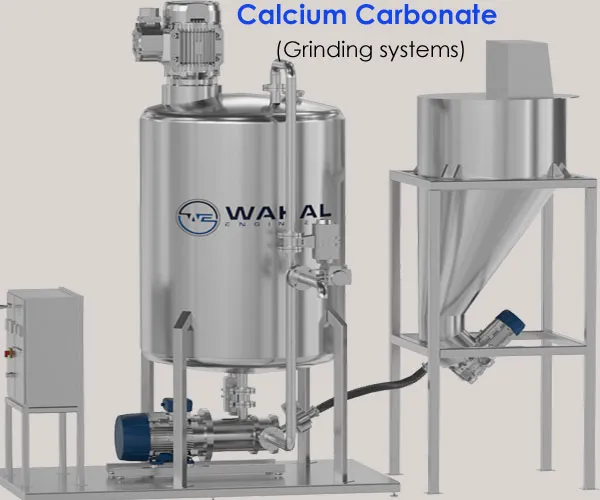
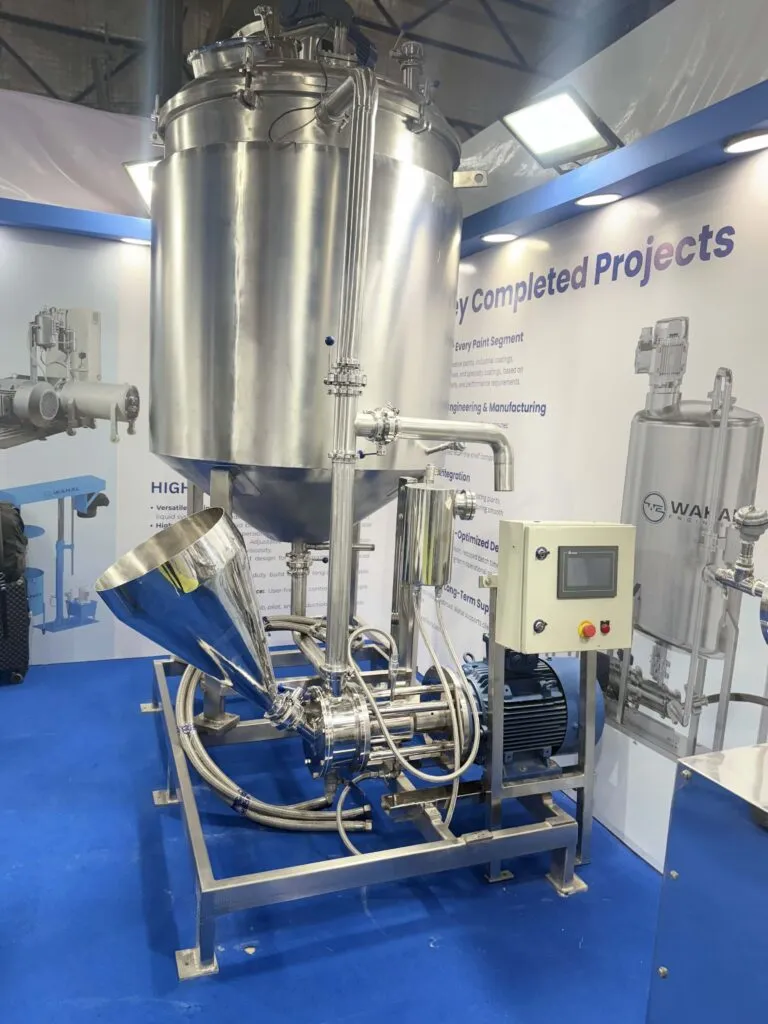
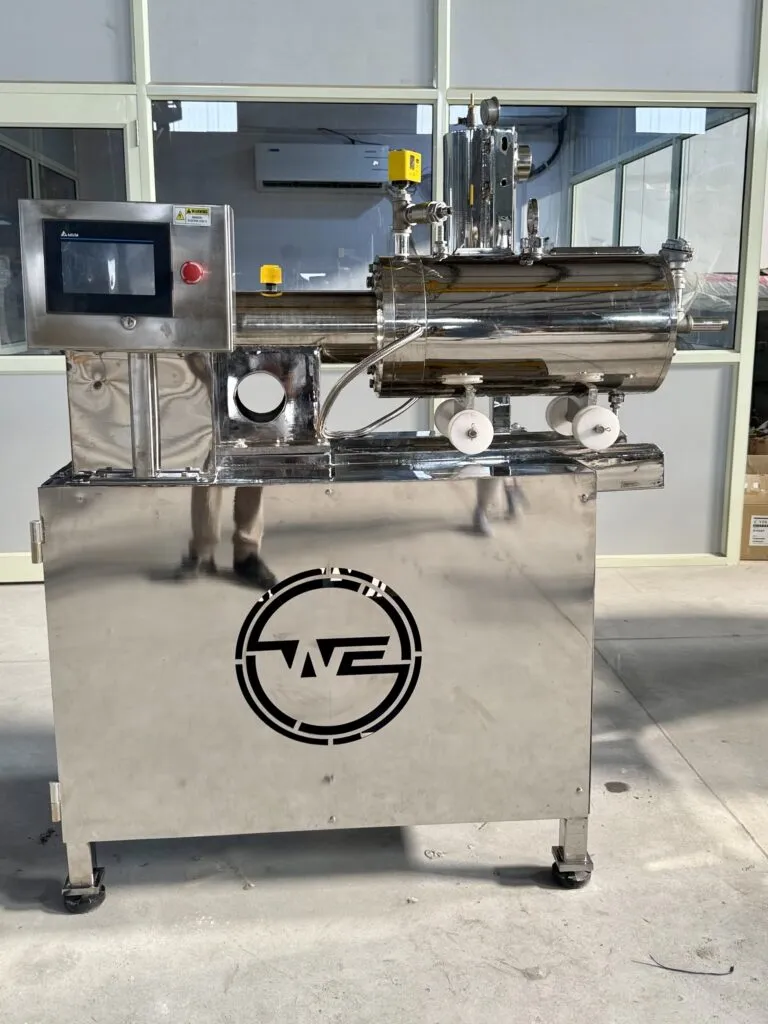
Calcium carbonate is a backbone filler in paints, coatings, adhesives, and many industrial formulations. Getting the particle size, shape and surface condition right directly affects opacity, rheology, gloss and cost. Wahal’s systems pair an LPM (for rapid, dust-free powder induction and wetting) with Wahal bead mills (ceramic-lined for low contamination and long life) and the option to dry the slurry after milling. The result: faster process cycles, tighter PSD (particle size distribution), lower waste and a product that scales from lab trials to full production.
1. Cleaner powder handling and faster wetting — why LPM first
Dust-free powder induction: LPMs introduce bulk calcium carbonate into water or binder under vacuum/low-shear induction, eliminating dust and improving workplace safety.
Uniform hydration and wetting: LPMs wet each particle quickly and evenly, reducing lumps and reducing the time the bead mill needs to reach target PSD.
Higher feeding rates: Because the LPM feeds an already-wetted slurry, bead mills receive a consistent feed — improving throughput and stabilizing product quality.
2. Wahal bead mills with ceramic lining — low contamination, long life
Ceramic lining = minimal iron contamination: Ceramic (alumina/zirconia) linings and beads resist wear and avoid metal pick-up — essential when calcium carbonate is used in high-whiteness applications (paints, paper, plastics).
Improved abrasion resistance: Ceramic lining extends equipment life and reduces maintenance downtime compared with steel-lined mills.
Stable optical properties: Lower contamination keeps TiO₂ replacement strategies predictable — you’re not fighting unexpected greying or reduced brightness.
3. Superior milling performance & particle control
Efficient energy transfer: After LPM preconditioning, the bead mill works on dispersed particles — energy is used where it matters, producing a narrower PSD with less over-grinding.
Fine, controlled d50 and d90: The LPM + bead mill pairing delivers tight control over target sizes (e.g., sub-micron fractions when needed), which improves opacity and smoothness in end products.
Better dispersion of surface treatments: If your carbonate is surface-coated (stearates, silanes), the LPM wets and spreads additives uniformly before bead milling locks them into the particle surface.