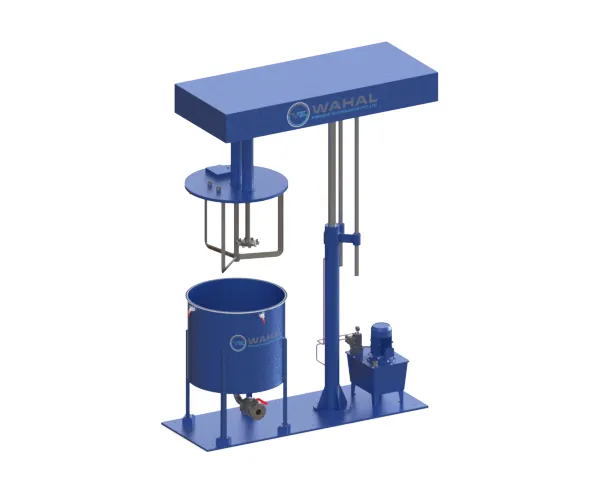
What is a twin shaft disperser?
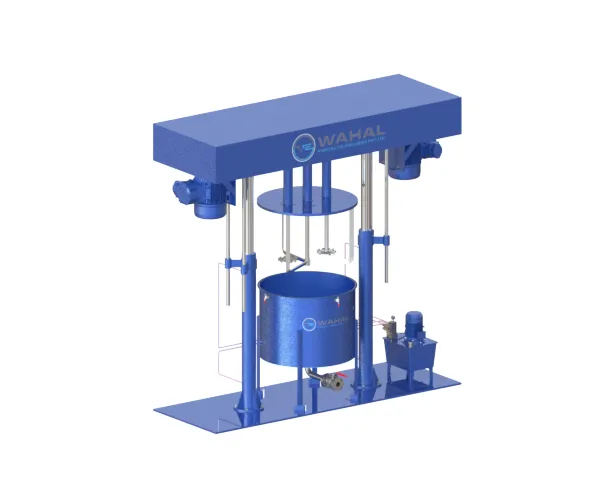
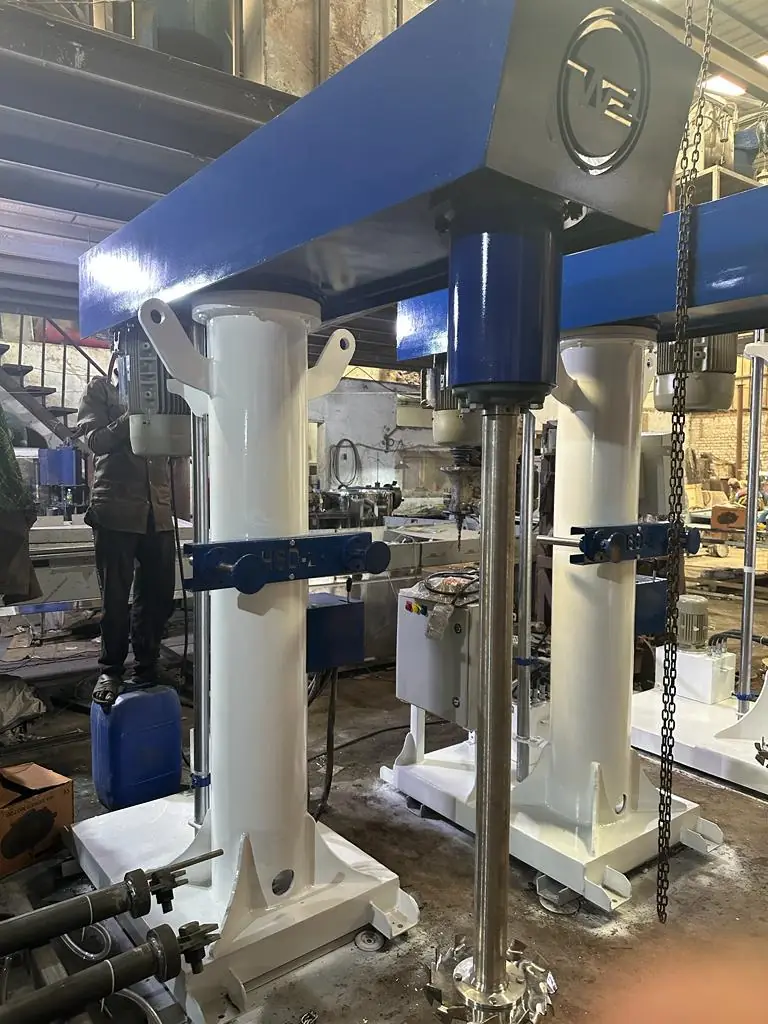
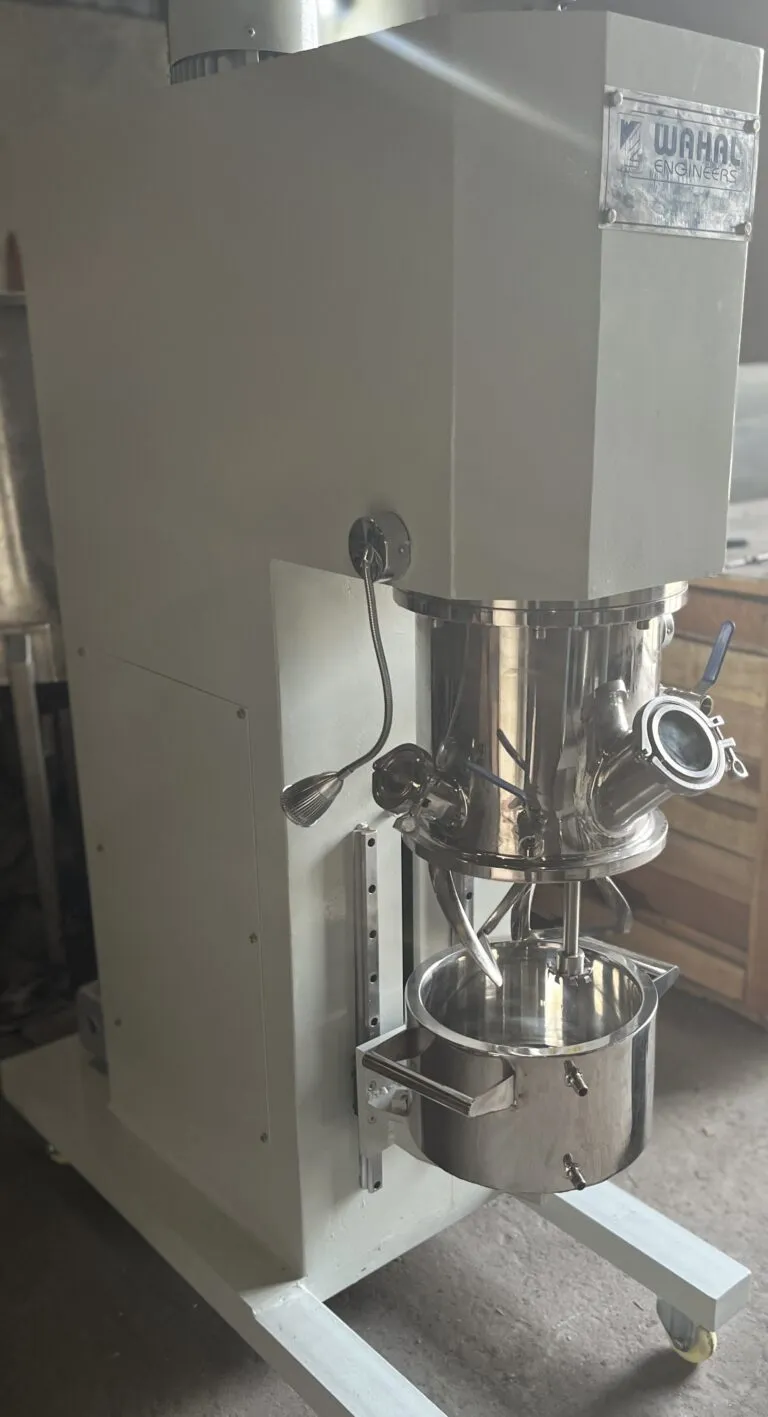
A twin shaft disperser is a mixing vessel with two shafts that do different jobs: one carries a high-speed disperser blade, the other a slow-turning anchor with scrapers. It is also known as a dual shaft disperser, a twin shaft mixer, a dual shaft mixer or a TSD. Unlike turbulent single-shaft mixing, the twin shaft design pushes viscous material into the working zone of the blades, so it is used for high-viscosity, difficult-to-mix formulations.
How it is built:
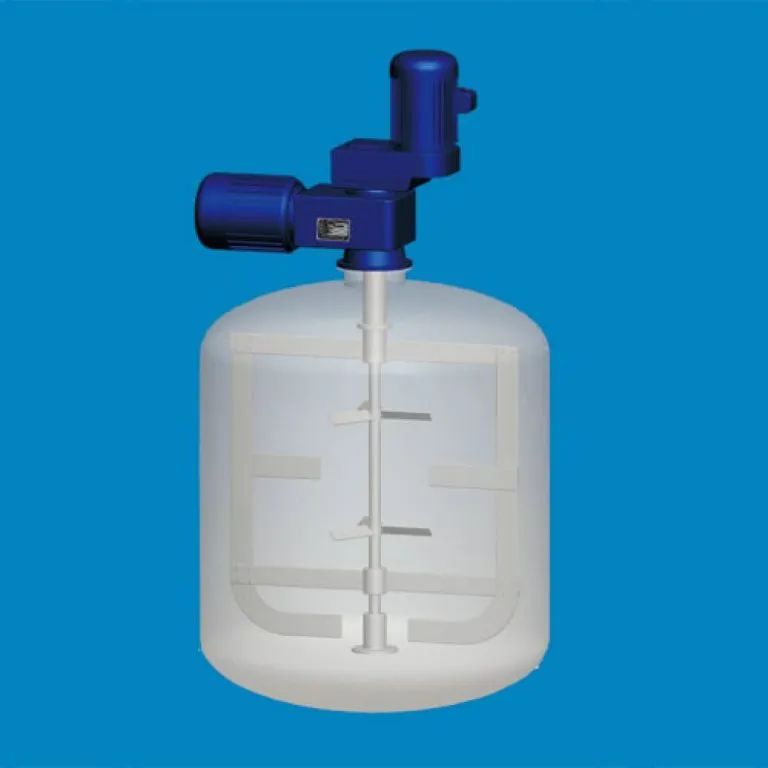
- Disperser shaft. A high-speed disperser blade. This second, high-speed shaft increases the shear force in the vessel.
- Anchor shaft. An anchor turning at slow speed distributes the product all along the circumference of the vessel.
- Teflon scrapers on the anchor clean the vessel walls during operation.
- Jacket. The scrapers aid heat transfer to an external jacket, for heating and cooling in the same vessel.
How a twin shaft disperser works
Twin shaft disperser working, step by step:
- Feed. The product is fed to the high-speed disperser blade.
- Dispersion. The disperser creates turbulence at the blade, which mixes, disperses and dissolves the materials.
- Bulk movement. The anchor turns at slow speed and distributes the product all along the circumference, so the batch as a whole is mixed under laminar conditions rather than turbulent ones. The viscous product is pushed into the working zone of the high shear blade and the lower shear blade.
- Wall cleaning and heat transfer. The Teflon scrapers clean the walls while the machine runs. That reduces material wastage, improves product quality and aids heat transfer to the external jacket.
The result is consistent, homogeneous mixing quality across the batch.
Advantages of a twin shaft disperser
- The whole batch is mixed. The anchor pushes viscous material into the working zone of the disperser.
- Less wastage. The scrapers remove material from the interior vessel walls.
- Better heat transfer. Clean walls enhance the heat transfer capabilities of the mixer.
- Consistent quality. Mixing is consistent and homogeneous.
- Several steps in one vessel. Mixing, dissolving, dispersing, heating and cooling take place in one unit.
Twin shaft disperser applications
| Industry | Products |
|---|---|
| Paints and resins | Paints, resins, silicones |
| Pharmaceuticals | Ointments |
| Food | Mayonnaise, jam, butter |
| Chemicals | Polyester, synthetic fiber |
| Cosmetics | High-viscosity creams, lotions and pastes that also need dispersing |
Construction and options
| Option | Details |
|---|---|
| Sanitary use | Designed for sanitary applications; can be configured to meet FDA compliance requirements |
| Hazardous areas | ATEX approved motors, or IEC 60079 flameproof / explosion-proof motors with certification |
| Standard motors | TEFC (totally enclosed fan cooled) or explosion-proof / ATEX certified, for use with frequency inverters or starters |
| Motor finish | Washdown motors and stainless motors |
| Control panel | ATEX approved control panels |
| Inlet and outlet | Designed to your requirement: flanged, DIN, tri-clamp, ASA and others |
| Size | Customised to the volume, viscosity and other process data |
Twin shaft, multi shaft or single shaft: which machine?
Wahal makes several machines for viscous products. They differ in the number of shafts and in what each shaft does.
| Machine | How it works | Used for |
|---|---|---|
| High speed disperser | One shaft with a cowl blade turning at high speed; speed and power are adjustable | Initial dispersion of pigments, additives and powders into a liquid |
| Twin shaft disperser (this page) | High-speed disperser blade plus a slow anchor with Teflon scrapers; laminar mixing | High-viscosity products that also need dispersing, with clean walls and heat transfer to the jacket |
| Triple / multi shaft disperser | Two or three independently driven agitators, with vacuum mixing in a closed system | High-viscosity creams, lotions, gels and toothpaste, food, pharmaceutical and chemical products |
| Planetary mixer | Two blades rotate on their own axes while orbiting a common axis; shearing and kneading | Thick, sticky and paste-like materials; kneading above about 2 million cP; 100 to 2000 litres |
| Contra-rotary (dual-shaft) agitator | Contra-rotary agitator, often with scrapers on the vessel wall | Very viscous, dense products such as toothpaste and grease |
Test your product before you buy
There's no better way of testing a machine than on your own product. Our fully equipped laboratory can run your trial, so you can see exactly what end results you'll get and at what times. If you want to keep a machine for trials, our rental program lets you keep it for as long as you need, pre-configured to your requirements, with expert process guidance. See trials and rentals.
Wahal Engineers makes its own mixers, dispersers and mills in India, at our factory in Bhigan (Murthal), Sonipat, Haryana. Tell us about your product, viscosity and batch size, and we will recommend a machine.
Frequently asked questions
What is a twin shaft disperser?
A mixing vessel with two shafts: a high-speed disperser blade that disperses and dissolves, and a slow anchor with Teflon scrapers that moves the batch under laminar conditions and keeps the walls clean. It is used for high-viscosity products. It is also called a dual shaft disperser or TSD.
How does a twin shaft disperser work?
The product is fed to the high-speed disperser blade, which creates turbulence and mixes, disperses and dissolves the materials. The slow anchor distributes the product all along the circumference of the vessel and pushes it into the working zone of the blades, so the batch is mixed under laminar conditions. Teflon scrapers clean the walls, which reduces wastage and aids heat transfer to the external jacket.
What is the difference between a twin shaft disperser and a high speed disperser?
A high speed disperser has one shaft with a cowl blade and is used for the initial dispersion of pigments into a liquid. A twin shaft disperser adds a slow anchor with scrapers. It mixes high-viscosity products under laminar conditions and keeps the walls clean for heat transfer.
Twin shaft or triple / multi shaft disperser: what is the difference?
A twin shaft disperser pairs one high-speed disperser blade with a slow anchor. Triple / multi shaft dispersers use two or three independently driven agitators, with vacuum mixing in a closed system.
Is a dual shaft mixer the same as a twin shaft disperser?
"Dual shaft" is used for two different Wahal machines. The twin shaft disperser on this page combines a high-speed disperser blade with a slow anchor, for high-viscosity products that need dispersing. A contra-rotary (dual-shaft) agitator is used for very viscous, dense products such as toothpaste and grease; see our agitators.
Can a twin shaft disperser be supplied for hazardous areas or sanitary use?
Yes. It can be configured to meet FDA compliance requirements for sanitary applications, and supplied with ATEX approved motors or IEC 60079 flameproof / explosion-proof motors with certification, and ATEX approved control panels.
Can I test a twin shaft disperser on my product before buying?
Yes. You can run a trial in our fully equipped laboratory, or rent a machine, pre-configured to your requirements, for as long as you need. See trials and rentals.