What a Wahal pesticide manufacturing plant includes
Making a pesticide involves synthesising the active ingredient, formulating it and diluting it. Wahal's pesticide manufacturing plants are formulation plants: they turn a technical-grade active into a saleable EC, SL, SC, WP, SP, WDG or CG product. We also supply technical-grade processing units; for synthesis equipment such as reaction vessels and distillation columns, see our glyphosate plant page.
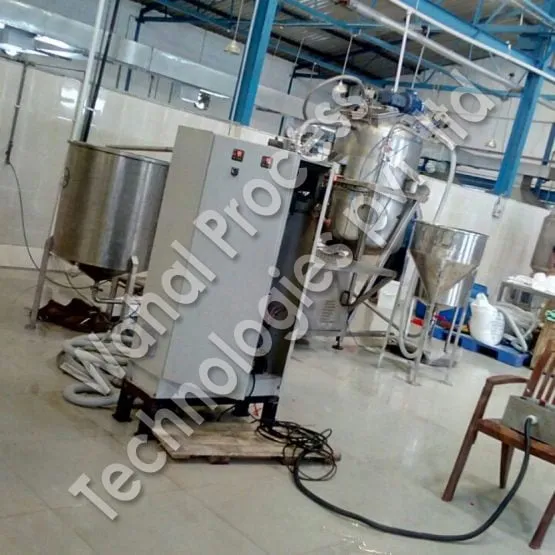
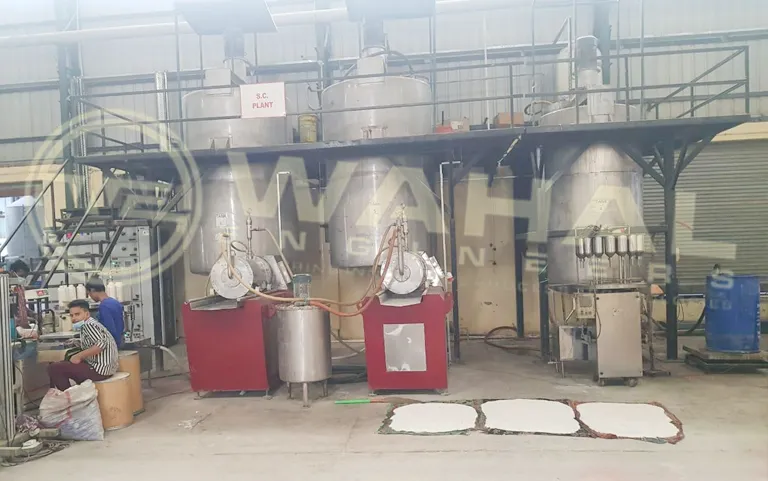
From raw material handling to finished product packing, a turnkey plant supplies:
- Storage tanks in SS316L or FRP for solvent and chemical compatibility
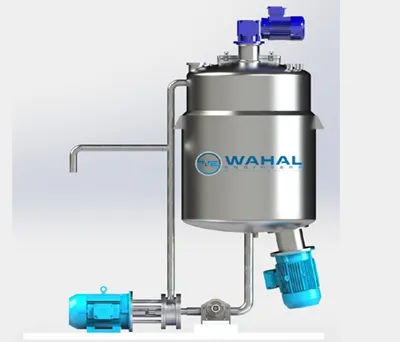
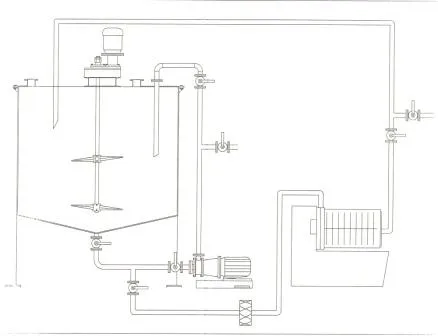
- Mixing vessels with agitators, finished-product storage vessels, transfer pumps and interconnecting pipelines
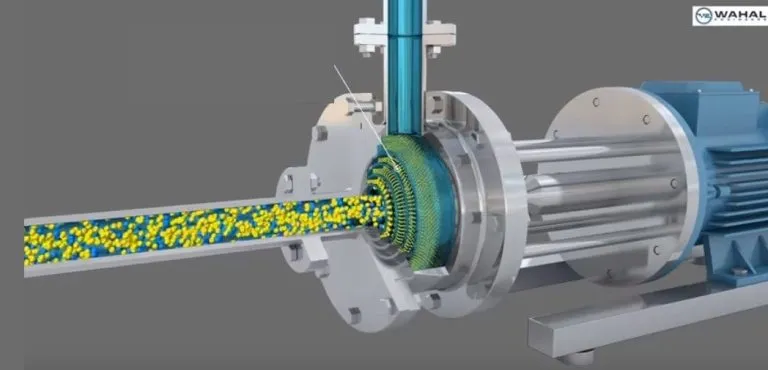
- High shear mixers and inline homogenizers for uniform dispersion in SC and EC
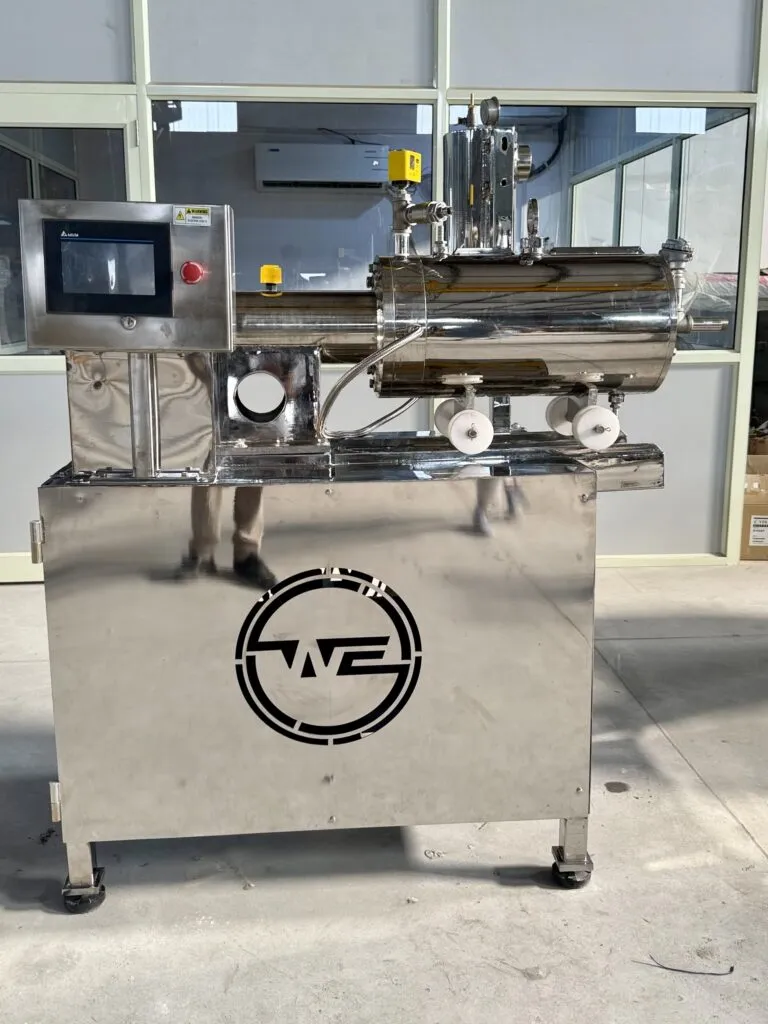
- Bead mills for particle size reduction in SC
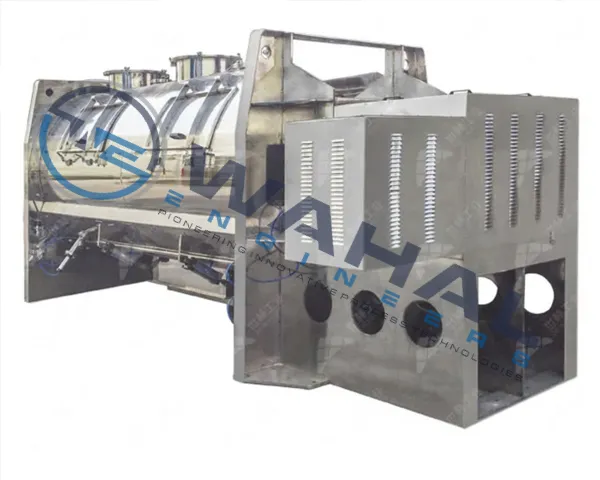
- Ploughshare and ribbon mixers for WP and WG
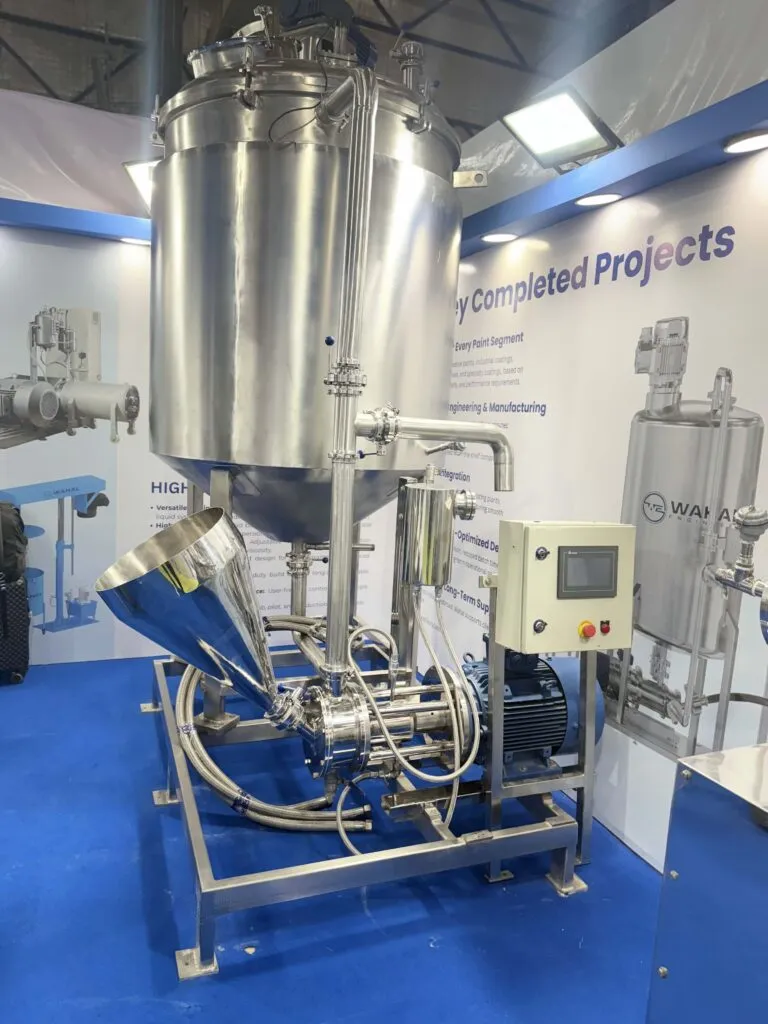
- Closed powder transfer systems and vacuum powder induction mixers that keep the plant dust-free
- Automated filling lines for liquid, powder and granule packaging
- P&ID and plant layouts, installation, training and ready spares
The design is modular, so capacity can be expanded later, and a multi-product plant runs several formulations on a single line.
Pesticide formulation types and the machines for each
Each formulation line uses a different core machine:
| Formulation | Product form | Main Wahal equipment |
|---|---|---|
| EC / SL: emulsifiable concentrate, soluble liquid | Liquid | High shear mixer and inline homogenizer for uniform dispersion; solvent-compatible storage tanks; liquid filling line |
| SC: suspension concentrate | Liquid suspension of a solid active | Homogenizer premix, then bead mill wet grinding to under 10 micron d90; see our suspension concentrate plant |
| WP / SP: wettable powder, soluble powder | Dry powder | Ploughshare or ribbon mixer; closed, dust-free powder transfer; powder filling line |
| WDG / SG / WG: water-dispersible, soluble or wettable granules | Granules | Ploughshare or ribbon mixer for the blend, WDG machinery, granule packaging line |
| CG: coated granules | Granules | Granulator, mixing vessels, coating pans, elevators, finished-product storage, filling line |
The same mixers and mills also make CS lambda-cyhalothrin (capsule suspension), fipronil, nano emulsions and liquid fertilisers, and grind propineb and sulphur slurries.
Pesticide manufacturing machinery Wahal supplies
- Bead mill (pesticide grinding machine). ZR splash series bead mills in nine WBM models, 0.6 to 300 litre chambers and 2 to 200 HP motors, grind to 50–500 nm. Explosion-proof ATEX and NEMA models are available.
- Inline homogenizer. Single, two and four stage rotor-stator machines for 15 to 200,000 litres per hour, self-pumping, with ATEX or IEC 60079 flameproof motors. It prepares the premix and deagglomerates solids of up to 1.5 inches before the bead mill.
- High shear mixer. Batch, in-tank and bottom-mounted rotor-stator mixers; fungicides and insecticides are among the applications listed.
- Powder induction mixer (LPM). Draws powders into the liquid under vacuum, dust-free and lump-free, up to 80% solids; models LPM 10 to LPM 200.
- Plough shear mixer and ribbon blender. Dry mixers for WP and WG: the ribbon blender works at 40–70% of its rated capacity; the plough shear mixer takes optional choppers for lumps and granulation.
- Laboratory bead mill (WBM 1.4). A 1.4-litre, 3 HP mill for formulation testing of pesticide and agrochemical suspensions before scale-up.
Automation, safety and compliance
Each plant has a PLC-based control panel with an HMI touchscreen, recipe storage, load cells for digital weight indication, dosing systems and actuated valves; PLC and SCADA integration adds batch tracking and reporting.
Solvent areas get ATEX-certified flameproof panels and ATEX or IEC 60079 flameproof motors, and plants are designed to meet FAO/WHO agrochemical formulation guidelines and EPA, BIS and REACH where applicable. Closed powder transfer and vacuum powder induction keep the plant dust-free; see our pesticide and herbicide plants page.
Design priorities: superior metallurgy, easy dismantling, low power consumption and ready spares.
Planning a pesticide plant: capacity, layout and cost
What a pesticide factory costs depends on which formulation lines it needs (an EC/SL line is tanks, mixers, homogenizers and filling; SC adds bead mills; WP and WG add dry mixers and dust-free powder handling; CG adds a granulator and coating pans), the batch size and daily output, the level of automation, flameproof requirements for solvent sections, and whether it is a single- or multi-product line.
Wahal starts with consulting and a feasibility analysis, then customised engineering: plant layout, P&ID and storage for raw materials and finished products, followed by testing, installation, training and spares. Environmental regulations and safety standards are covered on our insecticide manufacturing plant setup page.
Types of pesticides these plants produce
Plants are supplied for: Herbicides, Insecticides, fungicides, miticides, molluscicides, ovicides, nematicides, rodenticides, algaecides, antimicrobials, biopesticides, desiccants, defoliants, disinfectants, repellents, pheromones, synergists, mothballs and wood preservatives.
There is no better way to test a plant than on your own product: run your formulation in our fully equipped laboratory, or rent a machine pre-configured to your requirements, see trials and rentals. Wahal Engineers builds pesticide manufacturing plants at its factory in Bhigan (Murthal), Sonipat, Haryana, with its head office in New Delhi; our clientage includes the top pesticide manufacturing companies in India and across the globe.
Frequently asked questions
What is a pesticide formulation plant?
A plant that turns a technical-grade active ingredient into a usable product: an emulsifiable concentrate or soluble liquid (EC/SL), a suspension concentrate (SC), a wettable or soluble powder (WP/SP), water-dispersible granules (WDG) or coated granules (CG). Wahal supplies these plants turnkey, from storage tanks to filling lines.
Which pesticide formulations can the plant make?
EC/SL, SC, CG, WP/SP and WDG/SG/WG; the same equipment also makes CS lambda-cyhalothrin, fipronil, nano emulsions and liquid fertilisers, and a multi-product plant runs several formulations on one line.
What machinery is used in a pesticide manufacturing plant?
Storage tanks, agitated mixing vessels, high shear mixers and inline homogenizers for the premix, bead mills for suspension concentrates, ploughshare or ribbon mixers for powders and granules, powder induction mixers for dust-free wetting, filling lines and a PLC control panel with recipe storage.
How fine does a suspension concentrate need to be ground?
Our suspension concentrate plants reach under 10 micron d90 in less than an hour: a homogenizer premix, then a ZR splash bead mill that can grind to the nano range. See the suspension concentrate plant page.
What decides the cost of a pesticide manufacturing plant?
The formulation lines it needs, batch size and output, level of automation, flameproof requirements and whether it is a single- or multi-product plant. Send us your formulations and target output and we start with a feasibility analysis.
Can one plant make several formulations?
Yes. Wahal builds multi-product plants with a single line for multiple formulations, with recipe management in the automation, and the modular design allows capacity to be expanded later.
Can we test our formulation before ordering a plant?
Yes. Our laboratory bead mill (WBM 1.4) and laboratory batch mixers from 2 litres use the same principles as the production machines, so results carry over to scale-up; the rental programme lets you keep a machine as long as you need.