Algae biomass processing technology
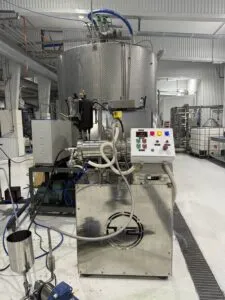 Global demand for biostimulants is growing at close to 11% a year, and algae-based products sit at the center of that growth. Algae extracts are rich in polysaccharides, amino acids, and plant growth hormones that improve crop resilience, root development, and nutrient uptake — all without the regulatory weight of synthetic agrochemicals.
But turning fresh algae biomass into a stable, effective liquid extract is not a simple blending job. It’s a multi-stage industrial process, and the technology choices made at each stage — particularly extraction and concentration — determine whether a plant produces a commercially viable biostimulant or an inconsistent, low-activity liquid. This article walks through how algae biomass processing actually works, the equipment involved, and what to look for when specifying or sourcing a production line.
## Why Algae Biomass Is Becoming a Strategic Agri-Input Feedstock
Algae biomass offers a few advantages that make it an attractive industrial feedstock for agricultural inputs:
– **Renewable and fast-growing**, with lower land and freshwater requirements than most terrestrial crops *Rich bioactive profile*: alginates, laminarins, cytokinins, auxins, and micronutrients that support plant stress tolerance *Regional and cultivated availability**, reducing dependence on imported raw materials *Regulatory tailwind**, as biostimulants gain formal recognition in agricultural input frameworks in the EU, North Africa, and elsewhere
The result is a growing number of industrial projects — from pilot-scale operations processing a few tons a day to larger facilities targeting thousands of tons annually — aiming to convert local or cultivated algae biomass into liquid extracts, concentrates, and downstream formulations.
## The Core Process: From Fresh Biomass to Liquid Extract
Regardless of scale, industrial algae processing follows a broadly consistent sequence:
1.Reception and weighing** of fresh biomass 2. **Washing and cleaning** to remove sand, salt, and epiphytes 3 Wet size reduction** (pulping/maceration) to increase surface area for extraction 4. Extraction** — the stage where cell walls are disrupted and active compounds are released into a liquid phase 5. Solid-liquid separation**, typically via decanter centrifugation 6. Polishing filtration** to clarify the liquid extract 7. Concentration**, usually by vacuum evaporation or membrane technology, to reach target dry matter content 8. Formulation and standardization** — blending, pH adjustment, and stabilization into the final product 9. Storage and packaging**
Of these nine steps, two determine most of the product’s commercial value: **extraction** and **formulation**. Get them right, and the rest of the line is comparatively straightforward engineering.
# Why Extraction Technology Is the Real Differentiator
Algae cell wall are structurally tough — that’s precisely what makes the biomass resilient in its natural environment, and precisely what makes releasing its bioactive compounds difficult. Under-processed biomass leaves valuable polysaccharides and growth hormones locked inside the cell structure, producing a diluted, lower-activity extract
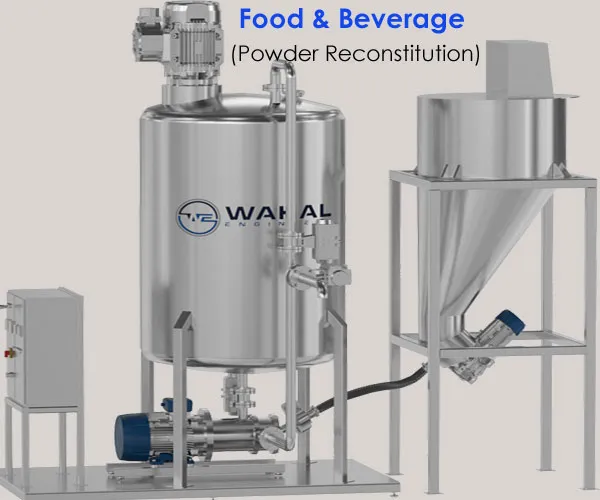
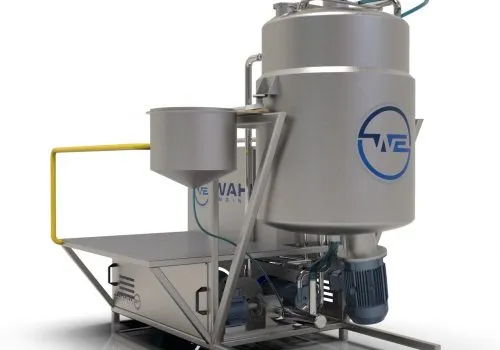
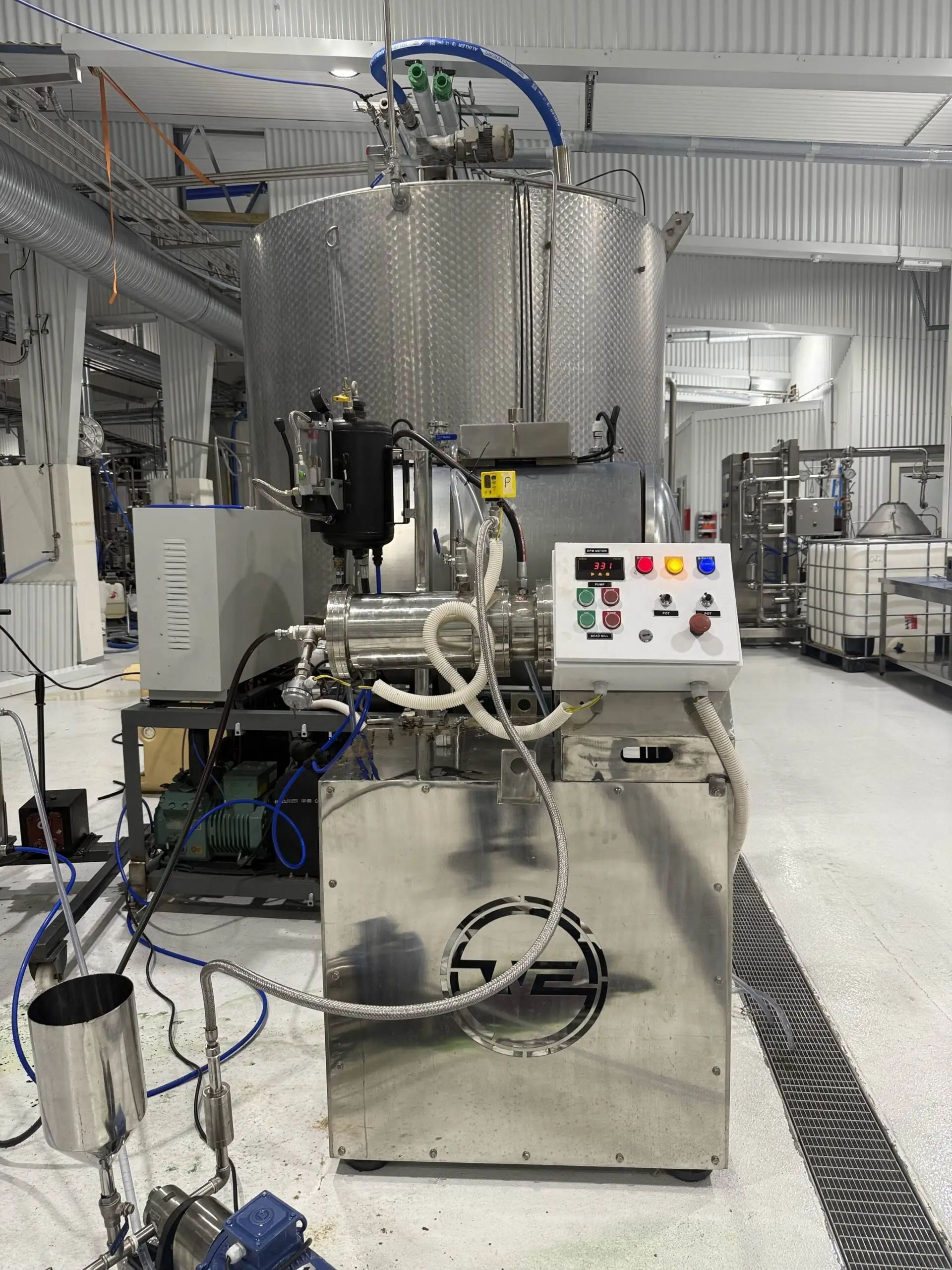
This is where **high-shear extraction reactors** make a measurable difference. Instead of relying on slow chemical digestion alone, a jacketed reactor fitted with a high-shear agitator — or an in-line rotor-stator homogenizer feeding the reactor — mechanically disrupts cell walls at a much faster rate. The benefits compound through the rest of the line:
– **Higher extraction yield** per ton of input biomass, improving the economics of the whole plant – **Shorter batch cycle times**, increasing daily throughput without adding a second reactor – **More consistent particle and droplet size**, which improves downstream separation and filtration efficiency – **Better final-product homogeneity and shelf stability**, since the same high-shear principle applied at the formulation/blending stage keeps concentrated actives evenly dispersed rather than settling out in storage
In practice, extraction method and mixing intensity are usually the single biggest lever available to a processor trying to improve yield without adding a second production line.
## Choosing the Right Processing Technology Partner
When evaluating algae biomass processing technology equipment suppliers or process integrators for an algae valorization project, a few questions separate a genuinely capable partner from a generic equipment vendor:
– Do they specialize in *high-shear mixing and reactor design**, or are they assembling a line from generic off-the-shelf process tanks? – Can they support **pilot or lab-scale trials** on your specific biomass before committing to full-scale capacity? – Is the line designed to be **modular and scalable**, so capacity can grow without a full redesign? – Do they provide clear guidance on **utility requirements, installation scope, and realistic lead times** — not just equipment cost?
Getting these answers early avoids the two most common and costly mistakes in algae processing projects: undersized extraction capacity that caps yield, and a rigid plant design that can’t grow with demand.
**Ready to evaluate your algae biomass processing technology?** Our team specializes in high-shear mixing and reactor technology for algae extraction and biostimulant production, and can advise on process design, equipment sizing, and pilot trials based on your specific biomass. [Get in touch to discuss your project.
Links : https://wahalengineers.com/industries/bead-mills-for-algae-cell-disruption/
algae biomass processing technology