The quality of a fermented milk or yogurt product is determined well before fermentation even begins. How thoroughly the premix — milk solids, stabilizers, and protein fortifiers — is blended and hydrated directly affects whether the finished product holds a smooth, creamy texture or develops whey separation (syneresis) on the shelf.
Why Premix Preparation Matters So Much
Yogurt and fermented milk manufacturing starts with a premix stage: combining milk (or reconstituted milk powder), stabilizers, and often additional milk solids-not-fat or whey protein for texture and nutritional fortification. This premix is then pasteurized, cooled, inoculated with starter culture, and fermented.
Because fermentation itself doesn’t correct problems introduced during premix preparation, any inconsistency at this stage — under-hydrated stabilizers, poorly dispersed milk powder, or uneven fat distribution — carries directly through to the finished product. This is why premix quality, not just the fermentation process itself, is often the deciding factor in final texture and shelf stability.
Key Rehydration and Blending Challenges
- Stabilizer hydration. Stabilizers such as pectin, gelatin, or modified starches need to be fully hydrated during premix preparation to build the gel network that prevents whey separation after fermentation. Under-hydrated stabilizer particles won’t develop their full water-binding capacity, leading to visible liquid separation on the shelf — one of the most common yogurt quality complaints.
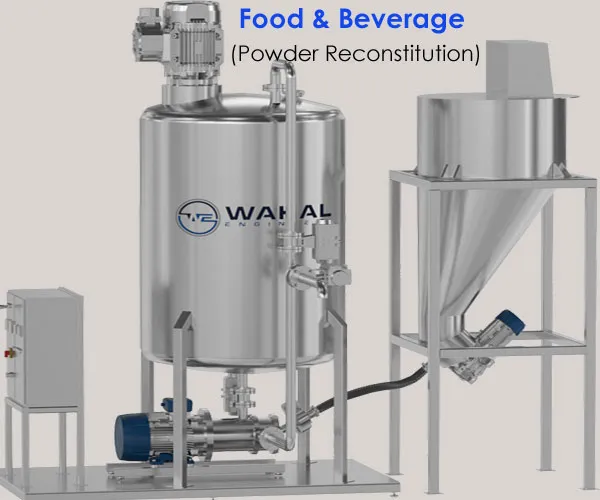
- Milk powder reconstitution. When milk powder is used (either as the primary base or for solids fortification), it must be fully dispersed and rehydrated without clumping. Poorly reconstituted milk powder leaves undissolved particles that affect both texture and appearance in the finished product.
- Protein fortification dispersion. Adding whey protein concentrate or other protein fortifiers for nutritional enhancement requires thorough dispersion to avoid clumping and to ensure even protein distribution, which also affects how the product sets during fermentation.
How High Shear Mixing Improves Premix Quality
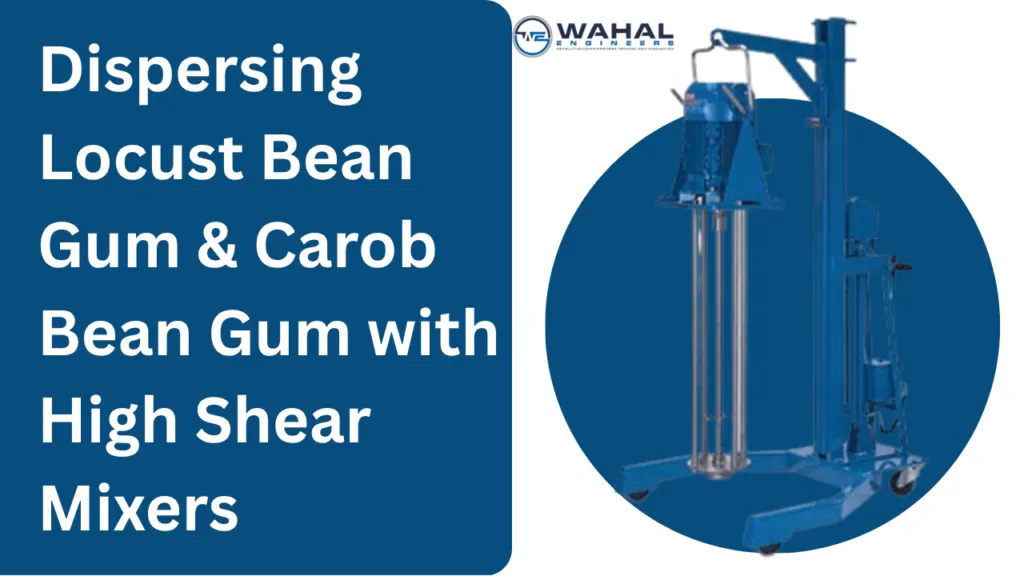
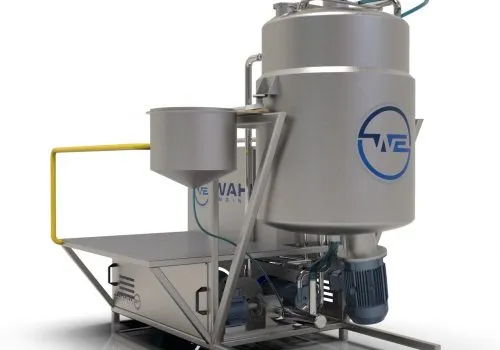
A high shear rotor-stator mixer addresses all three challenges in a single processing step — dispersing and hydrating stabilizers, milk powder, and protein fortifiers far more thoroughly and consistently than conventional agitation. This matters particularly for stabilizers, where hydration quality has a direct, measurable effect on final gel strength and syneresis resistance — two of the most important quality metrics in yogurt manufacturing.
Because the premix is fully processed before pasteurization and fermentation, any dispersion inconsistency introduced here becomes locked into the final product structure, making this mixing stage disproportionately important relative to its position early in the overall process.
Key Process Considerations
- Stabilizer hydration temperature and timing should be matched to the specific stabilizer system used — different hydrocolloids have different optimal hydration conditions
- Milk powder dispersion should avoid excessive foaming, which can introduce air that affects texture and fermentation behavior
- Batch consistency is critical — variability in premix hydration from batch to batch directly translates into inconsistent finished product quality
- Sanitary, food-grade equipment design is essential given the premix’s direct role in the finished dairy product
Why Choose High Shear Mixing for Yogurt Premix Production
Wahal Engineers’ high shear mixers are designed to achieve the thorough stabilizer hydration and milk solids dispersion that fermented milk and yogurt premix preparation demands.
- Complete stabilizer hydration for reliable syneresis resistance and gel strength
- Lump-free milk powder reconstitution, even at high solids concentrations
- Uniform protein fortifier dispersion for consistent texture and set
- Sanitary, FDA-compliant design suitable for dairy processing environments
- Batch and inline configurations available to match production scale
Frequently Asked Questions
What causes whey separation (syneresis) in yogurt?
Syneresis most often results from insufficient stabilizer hydration during premix preparation — the stabilizer’s water-binding gel network doesn’t fully develop, allowing liquid whey to separate from the set product over time.
Does premix quality actually affect the fermentation process itself?
While fermentation is primarily driven by starter culture activity, premix quality determines the underlying structure the fermented product sets into — poor dispersion or hydration at the premix stage cannot be corrected during fermentation.
Why is milk powder prone to clumping during reconstitution?
Similar to other hygroscopic powders, milk powder particles can form lumps with a gelled outer layer if not properly dispersed during initial contact with water — high shear mixing prevents this by rapidly separating and wetting individual particles.
Is high shear mixing needed for both stabilizer hydration and protein dispersion, or just one?
Both benefit significantly — stabilizers need thorough hydration to build gel structure, while protein fortifiers need even dispersion to avoid clumping and ensure consistent set behavior.
Wahal Engineers designs and manufactures high shear mixing and homogenization equipment for the pharmaceutical, food, chemical, and cosmetic industries, backed by decades of in-house engineering experience.