Key Process Considerations
Dispersion quality directly affects both yield and refining cost — better dispersion generally means less material waste and higher oil recovery
- Reaction and adsorption efficiency depend on contact surface area, which is maximized through fine, even dispersion rather than bulk mixing alone
- Processing temperature and dispersion should be coordinated, since many of these reactions are temperature-sensitive
- Equipment should be suitable for continuous processing given the high-volume, continuous nature of most commercial oil refining operations
Why Choose High Shear Mixing for Edible Oil Refining
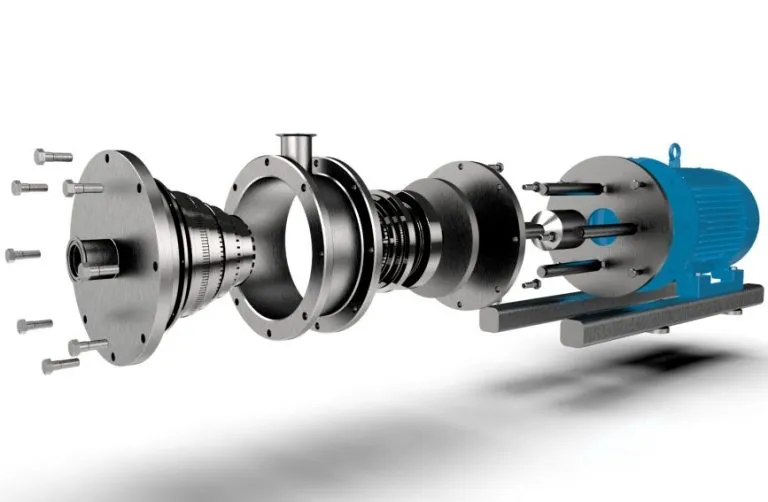
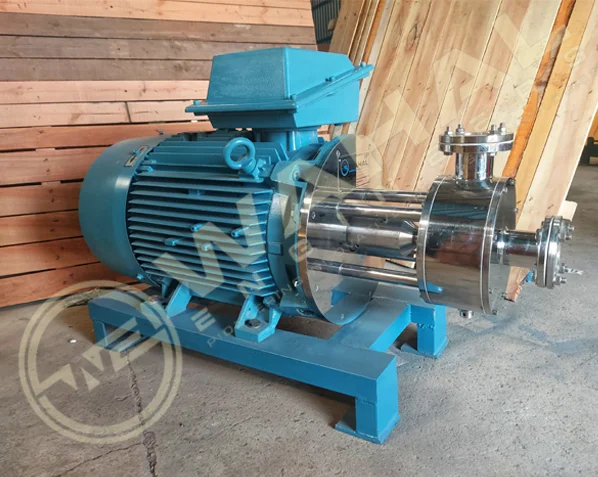
Wahal Engineers' high shear mixers are built to achieve the fine, uniform dispersion that edible oil refining processes depend on for efficient degumming, neutralization, and bleaching.
- Uniform dispersion of degumming water and acid, improving phospholipid hydration
- Even caustic soda distribution for complete neutralization and reduced oil loss
- Thorough bleaching earth dispersion, maximizing adsorption efficiency
- Suitable for continuous, high-volume inline processing
- Decades of in-house engineering experience across chemical and food-grade processing applications
Edible Oil Refining: Blending & Dispersing Process Explained
Crude edible oil isn't ready for consumption straight from extraction — it contains phospholipids, free fatty acids, pigments, and other impurities that need to be removed through a multi-stage refining process. At nearly every stage of that process, how effectively a small volume of reactive or adsorptive material is dispersed into a much larger volume of oil directly determines refining efficiency and final oil quality.
The Core Challenge: Dispersing Small Volumes Effectively
Edible oil refining typically involves several sequential stages — degumming, neutralization, bleaching, and deodorization — and the first three all share a common processing challenge: a relatively small quantity of a reactive or adsorptive substance (water, acid, caustic soda, or bleaching earth) needs to be dispersed thoroughly and uniformly throughout a much larger volume of oil.
If this dispersion is incomplete or uneven, the reaction or adsorption process doesn't reach its full potential — leading to residual impurities, lower yield, and inefficient use of processing chemicals and materials.
Key Refining Stages and Their Mixing Requirements
- Degumming.** Water (sometimes with acid) is dispersed into crude oil to hydrate phospholipids, allowing them to be separated out. Uniform dispersion ensures consistent phospholipid hydration throughout the oil volume, improving gum removal efficiency. 2. Neutralization (alkali refining).** Caustic soda is dispersed into the oil to react with and neutralize free fatty acids, which are then removed as soap stock. Poor dispersion leads to incomplete neutralization in some areas of the batch and oil loss from excess caustic reacting with neutral oil in others — making thorough, even dispersion directly tied to both yield and refining cost. 3. Bleaching.** Bleaching earth (an adsorptive clay) is dispersed into the oil to adsorb pigments and residual impurities. Even distribution of bleaching earth throughout the oil maximizes its adsorption efficiency — clumped or unevenly distributed bleaching earth leaves some oil under-treated while wasting adsorptive capacity elsewhere.
Why High Shear Mixing Improves Refining Efficiency
High shear rotor-stator mixing achieves far finer, more uniform dispersion of these reactive and adsorptive materials than conventional stirring, meaning:
- More complete reactions during degumming and neutralization, improving impurity removal
- Better bleaching earth utilization, since evenly dispersed clay contacts more of the oil's impurities per unit of material used
- Reduced processing losses, since more uniform neutralization reduces the amount of neutral oil lost to soap stock formation
- More consistent final oil quality, batch after batch.
Frequently Asked Questions
Why does dispersion quality affect oil yield during refining?
Poor dispersion of caustic soda during neutralization can cause excess caustic to react with neutral oil rather than just free fatty acids, increasing oil loss to soap stock — even dispersion minimizes this effect.
What is bleaching earth used for in oil refining?
Bleaching earth is an adsorptive clay used to remove pigments and residual impurities from oil; its effectiveness depends heavily on how evenly it's dispersed throughout the oil volume.
Is high shear mixing used at every stage of oil refining?
It's most impactful during degumming, neutralization, and bleaching, where reactive or adsorptive materials need to be dispersed into the oil — deodorization typically relies on different processing principles.
Does better dispersion actually reduce processing costs?
Yes — more efficient dispersion generally means less excess material needed to achieve the same refining result, along with reduced oil loss during neutralization.
---
*Wahal Engineers designs and manufactures high shear mixing and dispersion equipment for the pharmaceutical, food, chemical, and cosmetic industries, backed by decades of in-house engineering experience.*