
Key Process Considerations
- Hydration time and temperature should be controlled and consistent to achieve predictable pungency development batch after batch
- Dispersion should happen rapidly and uniformly to avoid pockets of dry, unhydrated flour that hydrate on a different timeline than the rest of the batch
- Oil emulsification requires fine droplet size for long-term stability in formulations that include it
- Sanitary, food-grade equipment is essential for condiment manufacturing
Why Choose High Shear Mixing for Mustard Production
- Rapid, uniform mustard flour dispersion, supporting consistent pungency development
- Fine oil emulsification for formulations requiring long-term stability
- Even spice and color distribution, avoiding streaking
- Sanitary, FDA-compliant design for food and condiment manufacturing
- Suitable for batch or continuous inline processing, depending on production scale
Frequently Asked Questions
Why does mustard pungency vary between batches?
Inconsistent pungency is usually caused by uneven hydration of mustard flour — since the flavor-generating enzymatic reaction depends on complete water contact, uneven dispersion leads to uneven flavor development.
Mustard preparation is as much a chemistry process as a mixing one. The characteristic pungency of prepared mustard comes from an enzymatic reaction that only activates once mustard flour is hydrated — meaning how the flour is dispersed into liquid directly affects not just texture, but the flavor development of the final product.
Why Mustard Preparation Is More Than Just Mixing
Mustard flour contains glucosinolates and the enzyme myrosinase, kept separate in the dry seed. When mustard flour is hydrated with water or vinegar, this enzyme is activated and reacts with the glucosinolates to produce the pungent compounds responsible for mustard's characteristic sharp flavor. This reaction is time- and temperature-sensitive — inconsistent or incomplete hydration leads to uneven pungency development across a batch, while poor dispersion leaves gritty, undissolved particles in the finished product.
Beyond flavor development, prepared mustard also needs to achieve a smooth, consistent texture, and — for oil-containing formulations — a stable emulsion that won't separate during storage.
Key Processing Challenges
- 1. Uniform mustard flour dispersion. Mustard flour, like other fine powders, can clump when added directly to liquid, leaving dry pockets that hydrate unevenly. Since pungency development depends on complete hydration, uneven dispersion directly translates into inconsistent flavor intensity across the batch.
- 2. Consistent hydration for pungency control. Because the flavor-generating enzymatic reaction depends on water contact, ensuring every particle of mustard flour is evenly and fully hydrated is essential for predictable, repeatable pungency from batch to batch.
- 3. Oil emulsification (for oil-containing formulations). Some mustard formulations include oil for texture and mouthfeel, which needs to be finely emulsified into the aqueous base to prevent oil separation during storage.
- 4. Spice and color dispersion. Turmeric and other spices used for color and flavor need even distribution to avoid streaking or inconsistent color across the batch.
How High Shear Mixing Improves Mustard Preparation
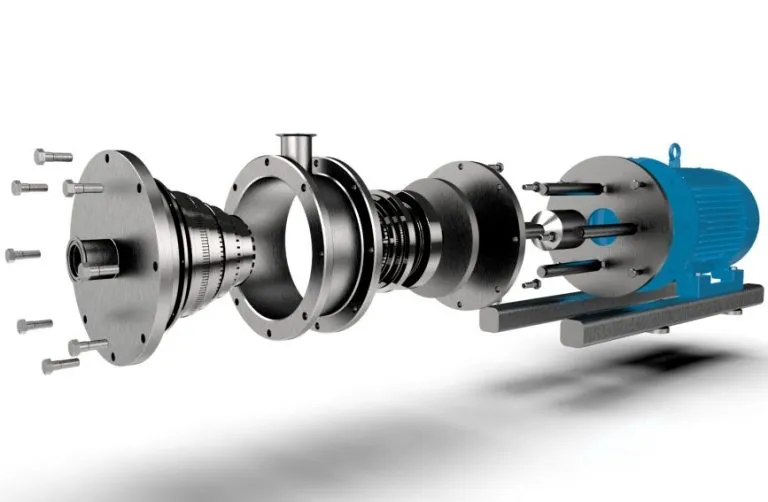
High shear rotor-stator mixing addresses all of these challenges by rapidly and uniformly dispersing mustard flour into the liquid base, ensuring every particle is wetted and hydrated at a consistent rate — which supports predictable pungency development rather than the batch-to-batch variability that uneven dispersion causes. Where oil is part of the formulation, the same high shear process finely emulsifies it into the base, preventing the separation that coarser mixing methods can leave behind.
Does all prepared mustard contain oil?
No — formulations vary, and only oil-containing mustard varieties require the emulsification step to prevent oil separation during storage.
What causes graininess in prepared mustard?
Graininess typically results from incompletely dispersed mustard flour or seed husk particles that weren't broken down and hydrated during processing.
Is temperature control important during mustard preparation?
Yes — the enzymatic reaction responsible for pungency is temperature-sensitive, so consistent processing conditions help ensure predictable flavor development across batches.
---
*Wahal Engineers designs and manufactures high shear mixing and dispersion equipment for the pharmaceutical, food, chemical, and cosmetic industries, backed by decades of in-house engineering experience.*