
Industrial Shampoo Manufacturing Equipment & Mixing Systems
Manufacturing commercial shampoos requires precise balance between surfactant dilution, rheology modification, active emulsion stability, and foam management. Conventional top-entry propeller agitators struggle with concentrated surfactants, often causing violent aeration, excessive batch cycles, and stubborn lumps of unhydrated polymer.
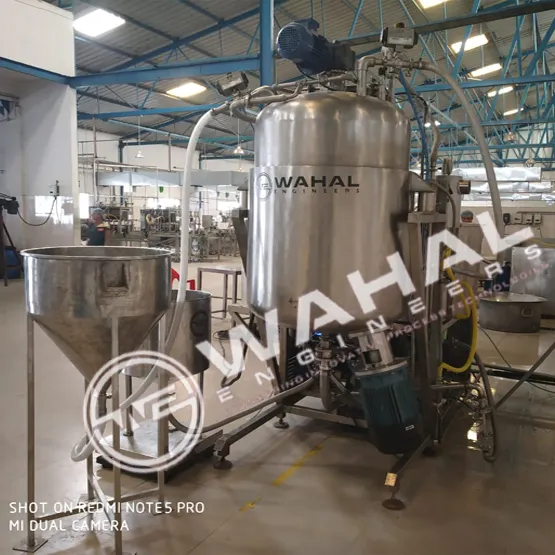
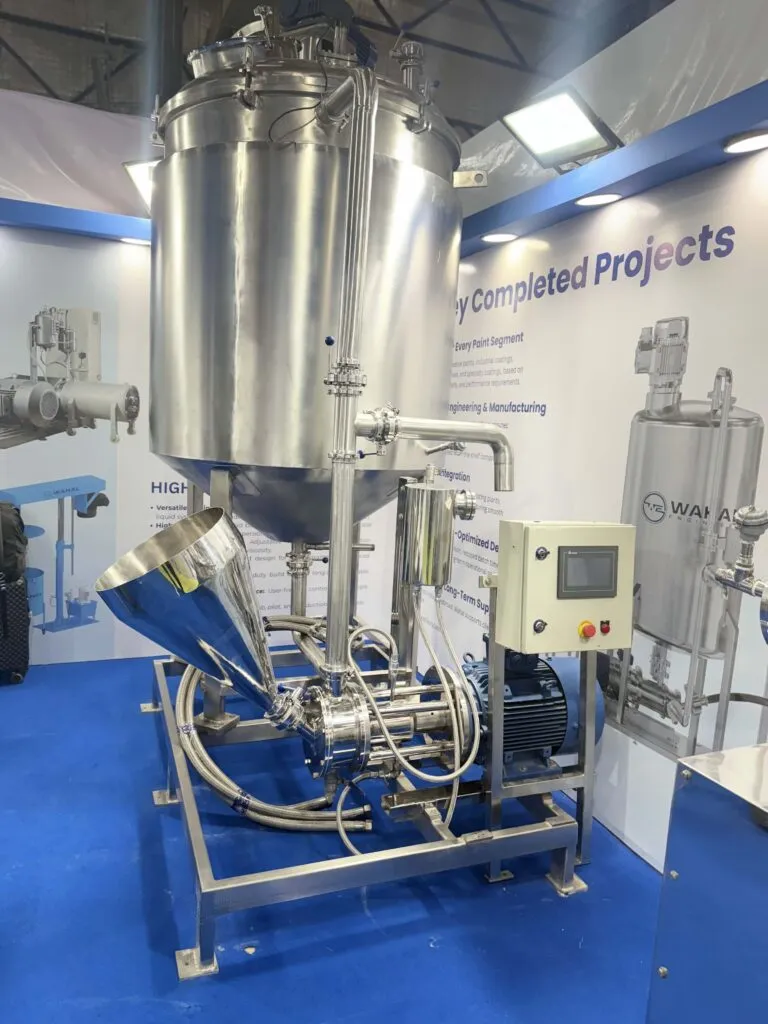
Wahal Engineers overcomes these formulation bottlenecks by combining high-shear rotor-stator shear pumps, vacuum mixing vessels, and specialized inline dilution skids. Whether formulating transparent clarifying shampoos, rich conditioning formulations, pearlescent daily cleansers, or therapeutic anti-dandruff suspensions, our engineering ensures uniform droplet distribution, stable viscosity, and minimal aeration.
Key Process Challenges in Shampoo Production (And How Wahal Solves Them)
1. High-Active SLES Dilution Without Aeration
Standard shampoo formulations rely on Sodium Lauryl Ether Sulfate (SLES) supplied as a highly viscous 70% active paste. When diluted in water using conventional open batch tanks, SLES forms an unmanageable gel-phase (hexagonal liquid-crystal state) that floats on the surface, resists dissolution, and whips air into a stubborn, rigid foam that takes hours to settle.
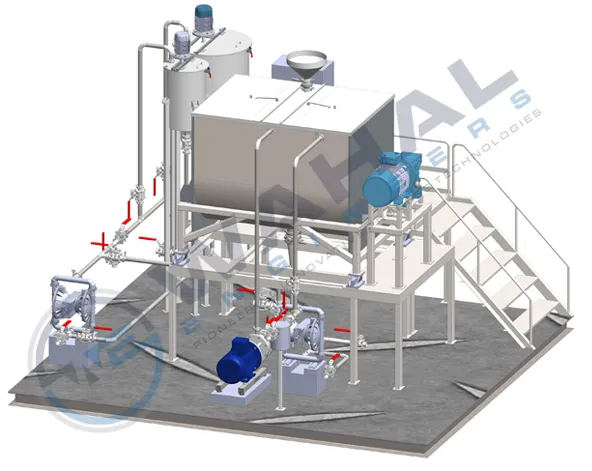
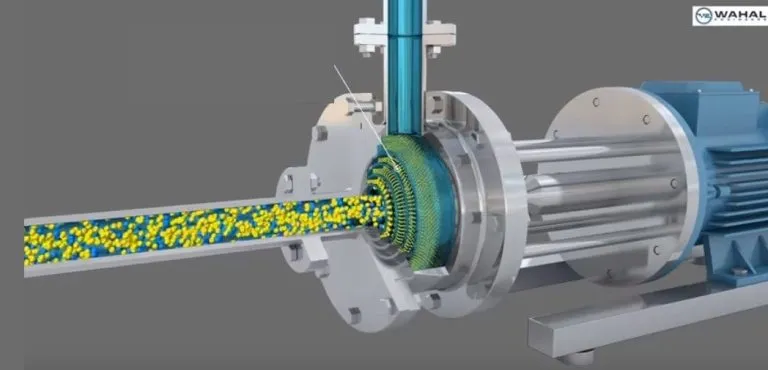
The Wahal Solution: Our SLES dilution and mixing plant draws 70% SLES paste and process water simultaneously into a high-shear rotor-stator inline mixing chamber. The intense hydraulic shear breaks down the gel phase in milliseconds, achieving complete dilution in a single pass without entraining ambient air.
2. Lump-Free Polymer & Gum Hydration
Conditioning shampoos rely on high-molecular-weight polymers like Carbomer, hydroxyethyl cellulose (HEC), and cationic guar to provide sensory slip, suspension of active ingredients, and shear-thinning rheology. Adding these powders through open vessel manholes inevitably produces "fish eyes"—dry powder encapsulated in an impenetrable hydrated outer shell.
The Wahal Solution: The Wahal Liquid Powder Mixer (LPM) creates high vacuum at the mixing head, sucking dry polymers directly into the turbulent liquid stream below the liquid surface. Every particle is instantly wetted and dispersed, eliminating filtration losses and reducing hydration times from hours to minutes.
3. Silicone Emulsion Stability & Particle Size Reduction
Conditioning and 2-in-1 shampoos contain insoluble silicone oils (dimethicone, dimethiconol) that must be emulsified into uniform droplets between 0.5 and 5 microns. Inadequate shear leads to droplet coalescence, causing silicone to separate and rise to the surface over storage.
The Wahal Solution: Wahal inline homogenizers subject the formulation to extreme mechanical and hydraulic shear, ensuring micro-droplet stability that prevents separation across fluctuating storage temperatures.
Wahal Shampoo Processing Equipment Range
| Equipment Type | Operating Mechanism | Size Range | Primary Function |
|---|---|---|---|
| Inline SLES Dilution Skid | Continuous high-shear rotor-stator pump with dual metering valves | Sized to your line | Single-pass dissolution of 70% SLES paste without foam generation |
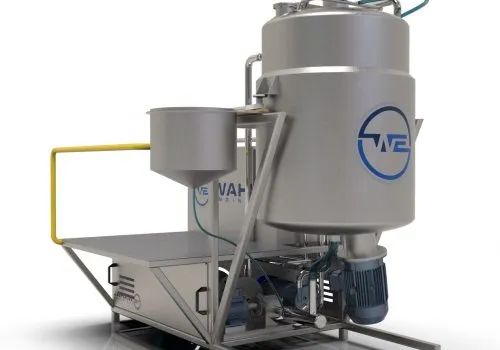
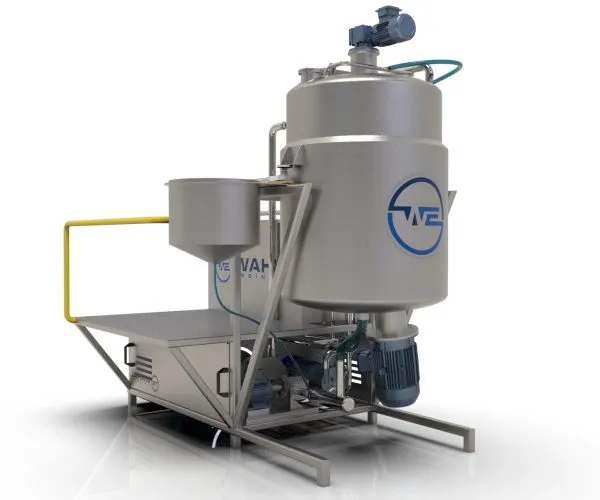
| Sanitary Vacuum Mixing Vessel | Jacketed vessel with slow anchor agitator and bottom-mounted homogenizer | 100 to 20,000 litres | Main reaction, heating, cooling, and vacuum deaeration vessel |
| Liquid Powder Induction Mixer (LPM) | Venturi vacuum suction with high-shear wetting stator | Sized to batch and powder load | Instant dispersion of carbomers, gums, and salt without fish eyes |
| Multi-Stage Inline Homogenizer | Single, 2-stage, or 4-stage concentric rotor-stator rings | 15 to 200,000 L/hr | Silicone emulsification, active dispersion, and post-batch finishing |
Sanitary Construction & cGMP Compliance
All Wahal shampoo manufacturing equipment is designed in strict accordance with cosmetic cGMP guidelines and international sanitary standards:
- Materials of Construction: All product contact parts are fabricated from AISI 316L stainless steel, mirror-polished. Non-contact structural parts are built from AISI 304 stainless steel.
- Clean-In-Place (CIP) / Sterilize-In-Place (SIP): Integrated 360° rotating spray balls ensure complete chemical cleaning without vessel entry. Sanitary tri-clamp fittings and zero-dead-leg diaphragm valves eliminate microbial harboring points.
- Shaft Seals: Hygienic double mechanical seals with sanitary barrier fluid prevent contamination and withstand dry-running during drain cycles.
- Instrumentation & Automation: PLC-based touch-screen control systems monitor batch temperature, jacket heating/cooling rates, VFD mixer speeds, vacuum levels, and load-cell ingredient dosing with automated recipe management.
Frequently Asked Questions (FAQ)
Can Wahal shampoo plants handle high-viscosity formulations?
Yes. Our vacuum mixing vessels integrate slow-speed anchor agitators equipped with scrapers. These scrapers continuously wipe the tank walls, preventing localized overheating during heating cycles and ensuring efficient thermal transfer when cooling viscous shampoos prior to packaging.
How does vacuum processing improve shampoo quality?
Operating under negative pressure accomplishes two vital goals: it allows bubble-free raw material transfer without mechanical pumping, and it extracts dissolved micro-air from the bulk liquid. This ensures crystal clarity in clear shampoos and prevents aeration-induced phase separation in pearlized formulations.
Can we test our specific formulation before ordering?
Yes. Wahal maintains a fully equipped pilot processing facility in Sonipat, Haryana. We invite prospective clients to bring their active surfactants, polymers, and fragrances to run comprehensive trials on our pilot machines and rental units to confirm viscosity, cycle times, and finished quality before finalizing machinery fabrication.
What does a shampoo making machine cost in India?
The price of a shampoo making machine depends on batch size, the level of automation, whether you need vacuum and heating, and how much of the line (SLES dilution, storage, filling) is included. Share your daily output and product range and Wahal will quote for a single shampoo mixing machine or a complete shampoo manufacturing plant.