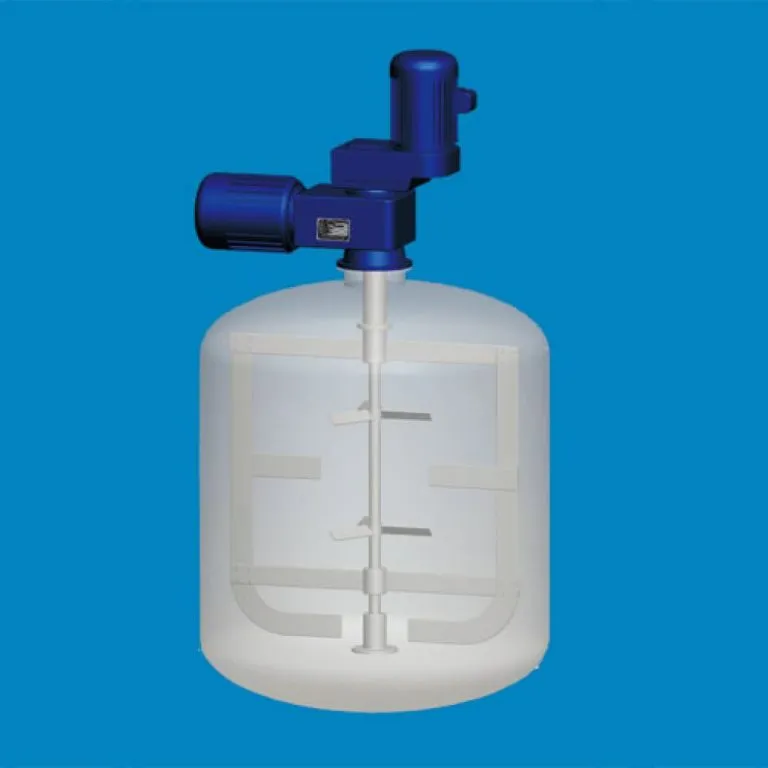
What is a hydrogenation reactor?
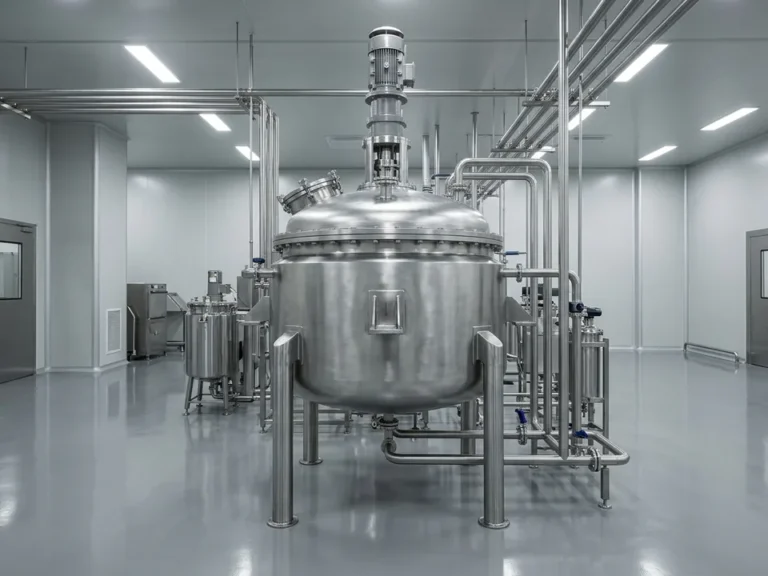
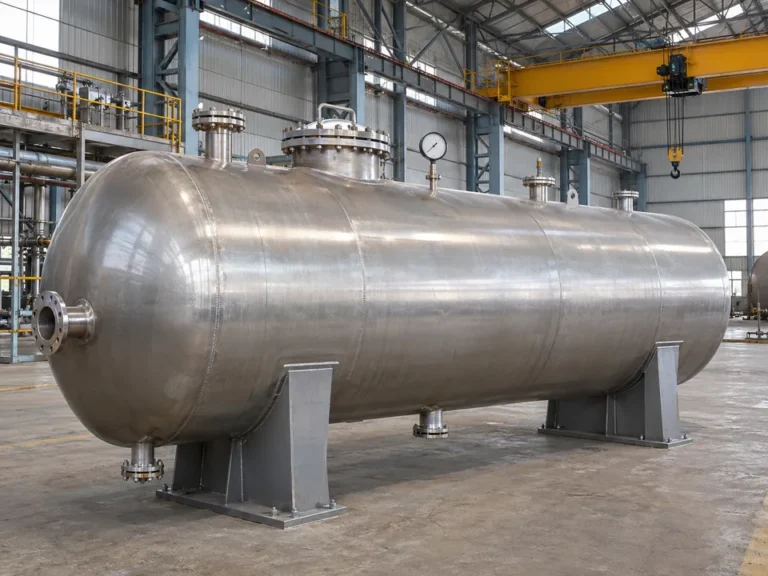
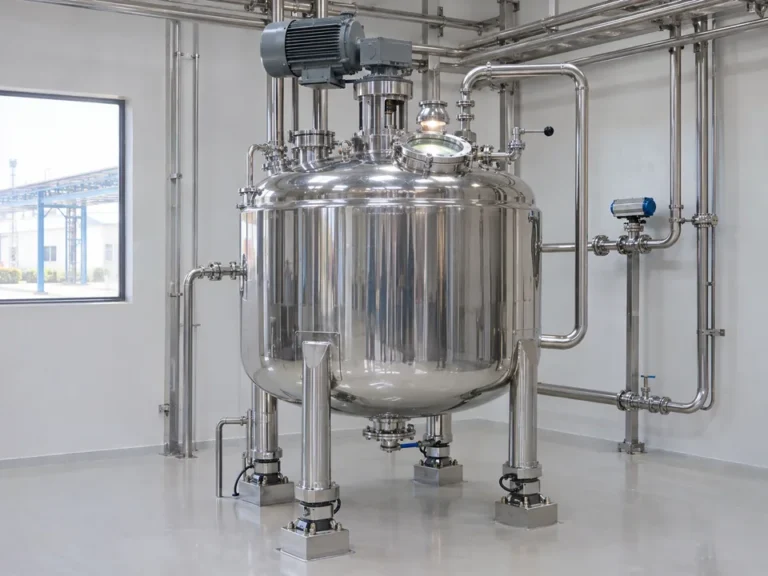
A hydrogenation reactor is a closed pressure vessel in which hydrogen gas adds to a liquid, or to a solid dissolved in a solvent, on the surface of a catalyst such as nickel, palladium or platinum. Other names are hydrogenator and hydrogenation autoclave.
In edible oil, pharmaceutical and fine-chemical plants, most hydrogenation is done in batch slurry reactors. A powdered catalyst is suspended in the liquid, hydrogen is fed into the headspace or below the impeller, and the agitator keeps gas, liquid and catalyst in contact until the uptake stops.
Three things set it apart from a general-purpose SS reactor: it holds a flammable gas under pressure, its shaft must be sealed against a very small molecule, and its impeller has to move gas as well as liquid.
Why gas transfer sets the design
Hydrogen has to dissolve in the liquid and reach the catalyst surface before anything reacts. In most slurry hydrogenations that transfer, not the chemistry, is the slowest step, so the batch runs only as fast as the reactor can move gas into liquid.
Three things raise the transfer rate:
- Higher hydrogen pressure, which raises how much gas the liquid can dissolve.
- More gas–liquid surface, from an impeller that breaks the gas into fine bubbles.
- Recirculating the headspace gas, so hydrogen that escapes the liquid gets another pass.
The second limit is heat. Hydrogenation is strongly exothermic, and a faster reaction releases its heat faster, so the cooling surface must keep pace with whatever the agitator makes possible. Gas transfer and heat removal are designed together.
Hydrogenation reactor design: main parts
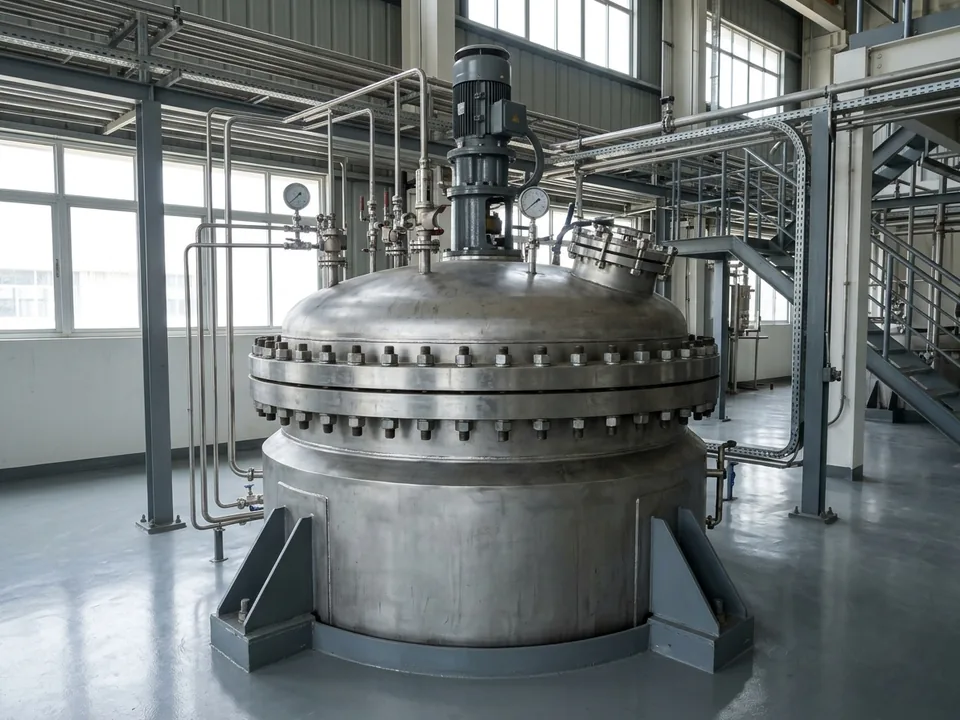
- Pressure vessel. Body and cover in SS 304 or SS 316, with wall thickness set by the design pressure.
- Bolted top cover. A heavy body flange with a ring of studs lets the cover come off for inspection and cleaning.
- Shaft seal or sealless drive. Hydrogen escapes through gaps that hold other gases, so the seal decides how tight the reactor is. Seals must suit the fluid, temperature and pressure; for hydrogen the usual answers are a double mechanical seal with a pressurised barrier fluid, or a magnetic drive with no shaft through the wall.
- Gas inlet. A dip pipe or sparge ring releases hydrogen under the impeller, on pressure or flow control.
- Cooling and heating. A jacket, limpet coil or internal coil, with steam, thermic oil or electric heating. An internal coil adds cooling area for strongly exothermic reductions.
- Baffles. They stop the batch spinning with the impeller, so the gas is actually broken up.
- Relief and instruments. A pressure relief valve and a rupture disc, pressure and temperature transmitters, and a measure of hydrogen flow or uptake.
- Catalyst separation. After the batch the catalyst is filtered off, often in a closed filter, and can be reused.
Choosing the agitator for hydrogenation
- Rushton (disc) turbines have flat radial blades on a disc and strong gas-handling capacity; they are the industry standard for fermenters and reactors.
- Hollow (concave) blade turbines draw less power and resist flooding better. Flooding is when the impeller is surrounded by more gas than it can disperse, and the gas rises past it in large bubbles.
- Gas-inducing (hollow-shaft) impellers pull hydrogen from the headspace down the shaft and release it at the impeller, recycling unreacted gas without an external compressor.
- Pitched-blade turbines higher on the shaft lift settled catalyst off the vessel base, so the full charge of catalyst stays active.
The impeller set, speed and motor are sized from your liquid, catalyst loading and gas rate. For the full range of impellers see our agitator mixer page.
High-pressure design: pressure, temperature and size
Wahal builds hydrogenation reactors for pressures up to 100 bar. The working pressure depends on the reaction: hardening edible oil runs at a few bar, while reductions such as glucose to sorbitol, or saturating an aromatic ring, need tens of bar. Temperature is chosen with the catalyst; going hotter speeds the reaction but can cost selectivity.
| Parameter | Range |
|---|---|
| Design pressure | Up to 100 bar |
| Material of construction | SS 304 / SS 316 |
| Heating / cooling | Jacket, limpet coil or internal coil; steam, thermic oil or electric |
| Agitator | Gas-dispersing turbines, sized to the gas rate |
Each reactor is sized to your batch.
Cost is set by the volume, the design pressure and temperature, the material, the agitator with its seal or drive, the cooling surface and the safety and control package. Price on request.
Batch or continuous hydrogenation
Batch stirred reactors suit multi-product plants, pharmaceutical and fine-chemical intermediates and edible oils, where each charge runs to a measured end point. Continuous reactors (fixed-bed, loop or flow) suit one high-volume product running round the clock.
Applications
- Edible oils and fats: hardening vegetable oils for vanaspati, shortening and margarine bases over a nickel catalyst.
- Pharmaceutical intermediates and APIs: reducing nitro groups to amines, removing protecting groups, saturating double bonds.
- Fine and specialty chemicals: nitrobenzene to aniline; aldehydes and ketones to alcohols.
- Sugar alcohols: glucose to sorbitol.
- Fatty chemicals and resins: fatty alcohols and hydrogenated resins.
Working safely with hydrogen
Hydrogen burns in air across a very wide range, from about 4% to 75% by volume, and needs very little energy to ignite. A hydrogenation reactor is therefore built and run so that hydrogen and air never mix inside it. Normal practice is to:
- purge with nitrogen before hydrogen goes in and after it is vented, and leak-test with nitrogen before each campaign;
- fit a pressure relief valve and a rupture disc sized for the worst case, discharging to a safe place;
- use electrical equipment rated for the hazardous area; hydrogen is in gas group IIC, the most demanding group;
- keep spent catalysts such as Raney nickel and palladium on carbon wet, because they can ignite in air when dry.
Frequently asked questions
What is a hydrogenation reactor used for?
Adding hydrogen to a product over a catalyst: hardening edible oils, turning nitro compounds into amines, making sorbitol from glucose, and many steps in pharmaceutical synthesis.
Is a hydrogenator the same as a hydrogenation reactor?
Yes. Hydrogenator, hydrogenation reactor and hydrogenation autoclave all mean a pressure vessel for reacting hydrogen with a liquid over a catalyst. Small shaker hydrogenators are laboratory instruments, a different product.
Which agitator type is used in a hydrogenation reactor?
A gas-dispersing impeller: a Rushton or hollow-blade turbine, or a gas-inducing hollow-shaft impeller, often with a pitched-blade turbine above it to keep the catalyst suspended.
What pressure does a hydrogenation reactor run at?
From a few bar for easy reductions to tens of bar for difficult ones. Wahal builds hydrogenation reactors for up to 100 bar.
Should hydrogenation be batch or continuous?
Batch for many products and pharmaceutical work, where each charge runs to an end point; continuous for one product made in large volume without stopping.
How is a hydrogenation reactor kept safe?
By never letting hydrogen meet air inside it: nitrogen purging, a leak-tight seal, a relief valve and rupture disc, hazardous-area electrics, and wet handling of spent catalyst.